
Slow Cooker Easter Ham With Apricot and Kahlua Glaze (With Spring Vegetables)
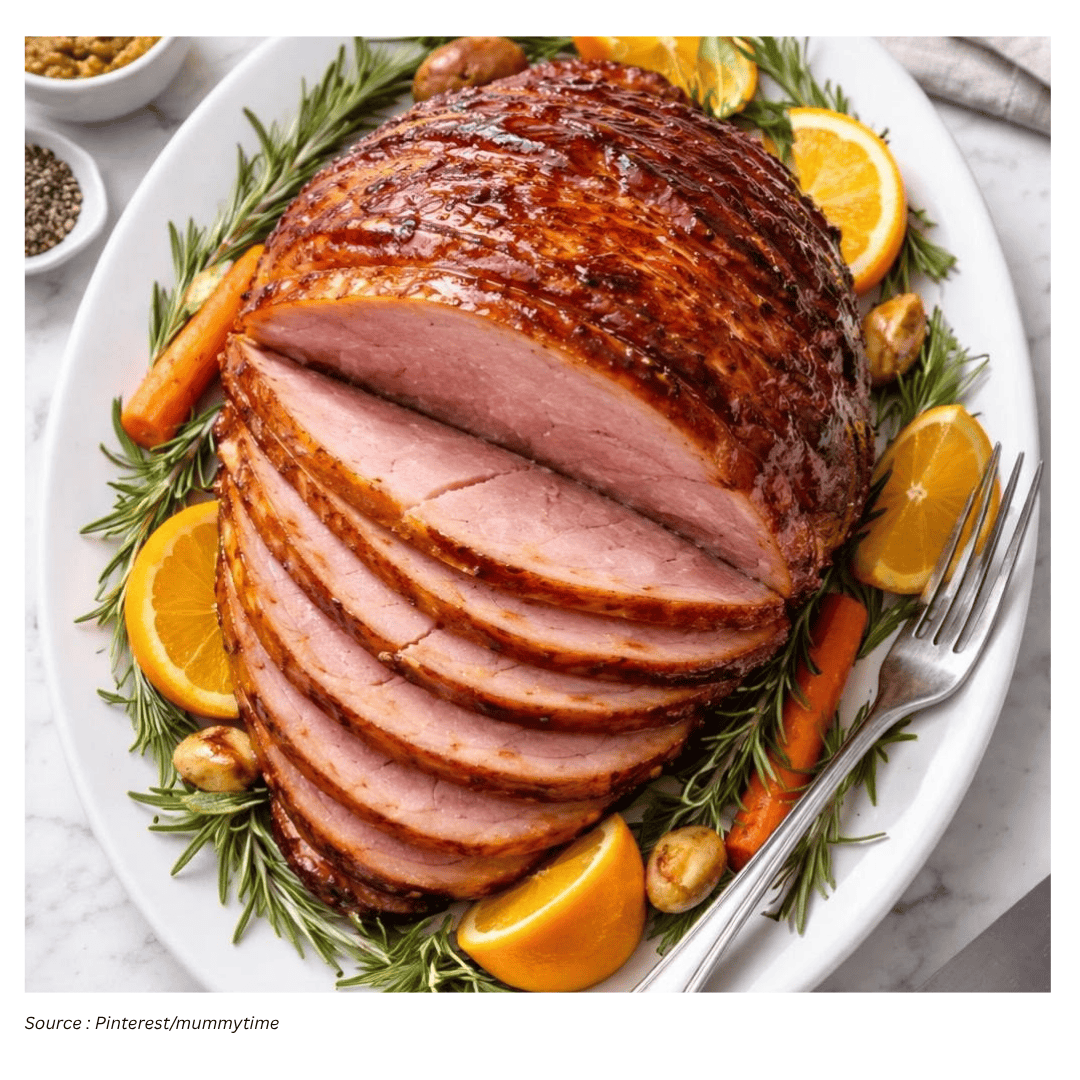
A holiday ham that practically cooks itself
A freshly cooked ham has a way of anchoring a holiday table, whether you’re planning an Easter brunch, a relaxed dinner, or a gathering that stretches into the afternoon. Ham is famously crowd-friendly, and it’s also one of the most low-maintenance centerpieces you can choose: because many hams are fully cooked and smoked, the main job is reheating while adding flavor. That’s exactly why a slow cooker is such a natural fit. It keeps the environment moist, frees up oven space, and lets you focus on sides, guests, or simply enjoying the day.
If you’re ready to move beyond the familiar brown sugar approach, this slow cooker ham takes a different route—sweet, savory, and warmly spiced. The glaze blends tangy apricot preserves with coffee-scented Kahlua, plus dry mustard, coriander, and cloves. The result is a ham that’s juicy and deeply flavored, with a glaze that tastes layered rather than one-note sweet.
Why this glaze works: sweet fruit, coffee notes, and balancing spice
The flavor profile here is built on contrast and balance. Apricot preserves bring fruit sweetness and tang, while Kahlua contributes a dark, rich note that reads as coffee-like and slightly caramelized. Dry mustard is the quiet stabilizer: it gives the glaze a bit of bite, helping prevent the sweetness from taking over. Coriander and cloves add warmth and an earthy spice layer that feels at home on a holiday ham.
Because the glaze is already fairly sweet, it’s worth paying attention to what your ham comes with. Many store-bought hams are sold pre-glazed or include a glaze packet. For this preparation, you’ll want to skip any extra sugary additions so the apricot-Kahlua mixture remains the star.
The slow cooker advantage: reheating plus infusion
This method is designed for a fully cooked, smoked ham. That matters: you’re not “cooking” raw pork so much as safely reheating it while infusing it with the glaze and aromatics. The slow cooker’s gentle heat helps the ham stay moist, and the covered environment encourages the glaze and juices to circulate. The payoff is a ham that tastes like it’s been tended carefully—even though the cooker is doing most of the work.
Another benefit is what happens around the ham. Instead of cooking vegetables separately, this recipe adds springtime baby vegetables directly to the slow cooker: pearl onions, baby carrots, and leeks. They soften in the ham’s savory juices and pick up the sweet-spiced glaze, while also lending their own aromatics back into the pot.
Choosing a ham that fits (and tastes great)
The most practical first step is selecting a ham that will physically fit into your slow cooker. A bone-in smoked butt portion is a particularly good choice for this setup because it’s often shorter than a typical shank portion half ham, making it easier to nestle into the cooker. Beyond the fit, a bone-in cut brings a meaty flavor, and it’s also straightforward to carve.
Look for a ham with skin and fat intact if possible. In this recipe, the surface is scored before glazing, which helps the mixture seep into the ham. As the slow cooker runs, the fat renders into the juices, enriching the liquid that will later be spooned over slices and vegetables.
That said, the approach is flexible. You can adapt it to the ham you prefer—spiral cut, shank end, bone-in, or boneless. The key is to keep the focus on reheating and flavoring, and to avoid doubling up on sweetness if your ham already includes a sugary glaze.
What to do if the ham doesn’t fit in the slow cooker
Sometimes you bring home the perfect ham, only to realize it’s too large for the slow cooker insert. There’s a workaround that can still make the recipe possible. Ease the ham into the insert as far as it will go. Then take a generous sheet of heavy-duty aluminum foil and wrap it around the ham and the rim of the slow cooker to create a seal. This helps trap heat and moisture even when the lid can’t fully close.
As the ham cooks, it may shrink slightly. If that happens, you may be able to replace the lid toward the end of cooking. The goal is to keep the environment as closed as possible so the ham reheats evenly and the vegetables cook down in the juices.
Ingredients and flavor components at a glance
This recipe’s ingredient list is short but purposeful. Each component plays a clear role in either the glaze, the aromatics, or the final balance of the dish.
- Fully cooked, smoked ham (bone-in butt portion is especially convenient for slow cookers)
- Apricot preserves for tangy sweetness and body
- Kahlua for dark, coffee-scented richness
- Dry mustard to balance sweetness
- Coriander and cloves for warm spice depth
- Dry white wine added partway through for acidity and another layer of flavor
- Baby vegetables such as pearl onions, baby carrots, and leeks
You can vary the baby vegetables based on what you enjoy, but the combination of pearl onions, carrots, and tender leeks is especially fitting for spring and works well with the ham’s juices.
Step-by-step method: slow cooker ham with apricot-Kahlua glaze
The process is straightforward: score, blend, brush, cook, glaze again, and finish to temperature. The vegetables cook alongside the ham, making the final platter feel complete without extra pots.
- Place the ham cut-side-down on a cutting board and score the skin with a sharp knife.
- In a high-speed blender, combine the apricot preserves, Kahlua, mustard, coriander, and cloves.
- Use a pastry brush to coat the ham with ½ of the glaze.
- Trim the leeks to remove the stem end and tough dark green shoots, then slice them in half lengthwise.
- Rinse the leeks under cold water to remove any dirt between the layers.
- Slice the leeks crosswise into ½-inch pieces.
- Arrange the leeks, carrots, and pearl onions around the ham.
- Cover the slow cooker and cook the ham for 1 hour.
- Uncover, pour the wine over the ham, and return the lid.
- Cook for another hour, then brush on the remaining glaze.
- Continue to cook the ham until it reaches 140 F at its thickest point (about 4-5 hours total cooking).
- If your slow cooker has a bake/broil setting, you can use it briefly to crisp up the surface of the ham, or turn the temperature to high for the last hour of cooking.
- Remove the ham from the slow cooker and let it rest on a cutting board for 15 minutes. Reserve the vegetables and pan juices to serve with the ham.
- Carve the ham and serve it with vegetables and your favorite sides.
Timing, temperature, and the “juicy ham” payoff
The finish line for this ham is 140 F at the thickest point, which typically takes about 4 to 5 hours of total cooking time in the slow cooker. Because the ham is fully cooked, the objective is safe reheating plus flavor infusion. The slow cooker’s steady heat helps the ham stay juicy, and the repeated glazing—half at the start, then the remainder later—builds a more pronounced surface flavor.
If you like a slightly crisped exterior, the optional bake/broil setting (when available) offers a way to add a little texture at the end. Alternatively, turning the temperature to high for the last hour can help intensify the glaze’s finish without complicating the process.
Serving: bring the cooker straight to the platter
One of the most appealing parts of this recipe is how it goes from cooker to table. After a short rest—15 minutes on a cutting board—the ham is ready to carve. The vegetables can be lifted out and arranged around the sliced meat, and the pan juices can be reserved for spooning over the platter. Those juices are where the magic collects: rendered fat, savory ham drippings, glaze, and the aromatics from leeks and onions.
Because the vegetables have cooked in the same environment, they’re not just a side dish; they’re part of the ham’s overall flavor story. Each bite carries some of the sweet-savory glaze and the smoky richness of the meat.
Leftovers: a week of options (and beyond)
Leftover ham is one of the most useful proteins to have on hand, and this version—sweet and savory at once—pairs easily with a wide range of dishes. Beyond the classic sandwich, ham can add depth and saltiness to everyday cooking, turning simple meals into something more satisfying.
- Stir diced ham into quiches for a savory boost.
- Fold it into scalloped potatoes for a hearty, comforting bake.
- Add it to soups for extra flavor and protein.
- Use it in fried rice for a quick, satisfying meal.
- Try vintage-style favorites like creamy ham dip, cheese croquettes, or split pea soup—and remember to save the ham bone for the pot.
- Think beyond the usual: ham bits can work in scones, ramen, nachos, or even French toast for an unexpected sweet-savory twist.
Because this ham carries notes of apricot and warm spice, it tends to play well with both savory dishes and recipes that lean slightly sweet. That versatility makes it easy to keep using throughout the week without feeling repetitive.
Storing and freezing: make leftovers easier to use
For storage, it helps to portion leftover ham into individual-sized containers. Anything you don’t expect to use within a week can be frozen for later. Individual portions are especially handy for quick meals: toss a small container into an omelet, scatter it over a portable salad, or eat it as a simple protein snack when you need something fast.
With a slow cooker doing the heavy lifting and a glaze that brings both brightness and depth, this apricot-and-Kahlua ham is designed to be impressive without being fussy—exactly the kind of centerpiece that suits a holiday table and keeps paying off in leftovers afterward.