
Carne Asada Nachos for Parties: A Layered, Melty Tray Built Around Marinated Steak
Why carne asada nachos work for almost any gathering
Nachos have a way of fitting into nearly any kind of menu. They can be a snack that people pick at while talking, an appetizer that starts a meal, or a casual main course when you want something filling without much formality. The appeal is straightforward: crispy tortilla chips, gooey melted cheese, and toppings that you can tailor to the moment.
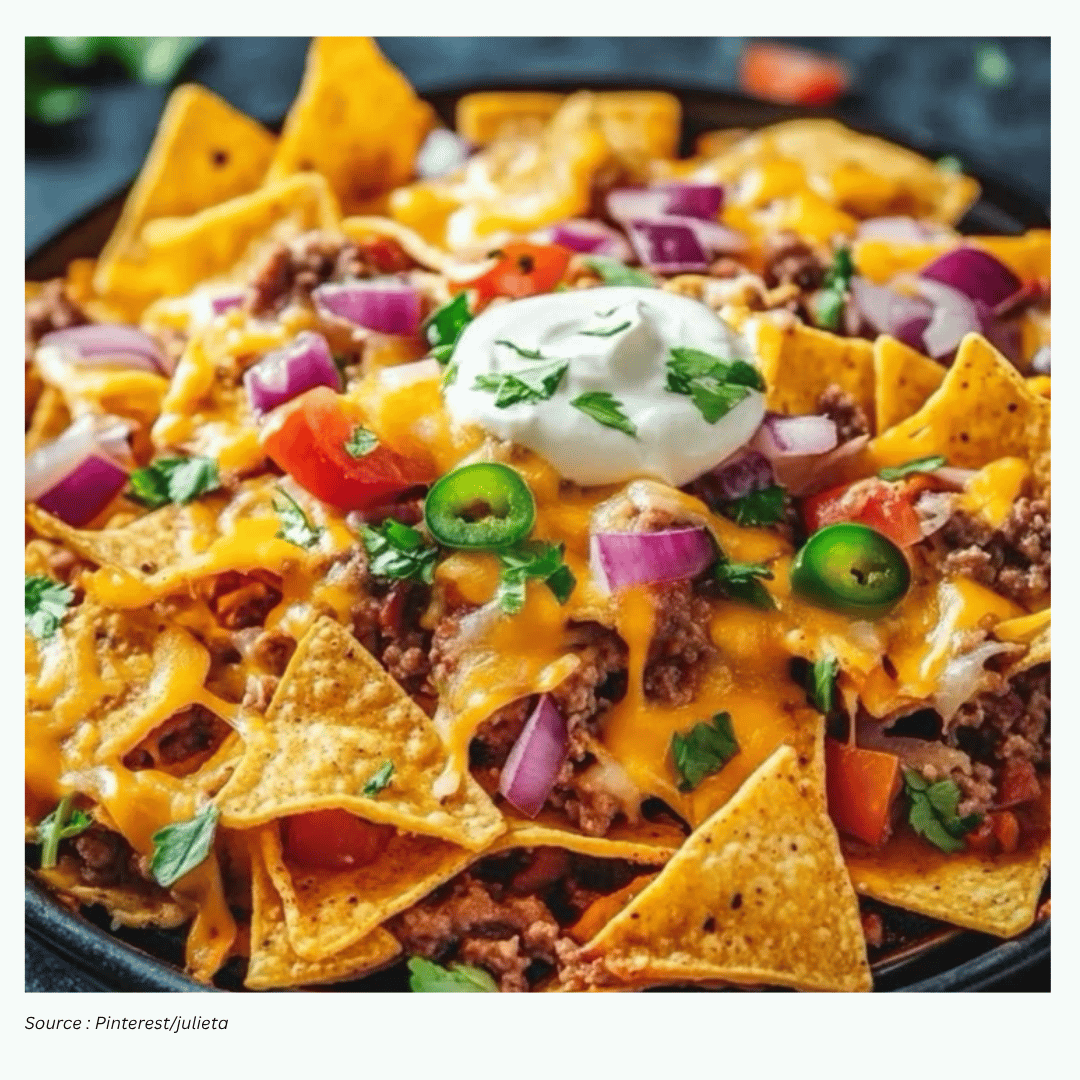
This version leans on beef instead of the more typical chicken approach. Specifically, it uses carne asada-style steak—beef that is marinated and cooked over high heat—then layered with chips, cheese, and tomatoes before being baked until melted. From there, you finish the tray with your favorite toppings, making the final result as simple or as loaded as you want.
What “carne asada” means in this context
Carne asada literally refers to beef that has been marinated and grilled. In practice for these nachos, the same idea carries through: steak is coated in a flavorful mixture (spices and juices), cooked quickly over high heat, and then used as the centerpiece topping. The goal is beef that stays juicy and tender while still bringing that browned, savory character that stands up to chips and cheese.
The core components: chips, cheese, steak, and a few essentials
The foundation is familiar: tortilla chips and cheese. What makes the tray feel like a meal is the addition of diced steak cooked in its marinade, plus tomatoes layered into the build. Once the nachos come out of the oven, the toppings are up to you, which is one reason this dish is so adaptable for parties and mixed preferences.
Because nachos are inherently customizable, you can treat the ingredient list as a starting point rather than a rigid formula. The method—marinate, cook, layer, bake, finish—matters more than locking into one exact set of add-ons.
Choosing the steak: flank steak, and when to swap in skirt steak
Flank steak is a common choice here. It comes from the cow’s belly muscles and is known for strong flavor, but it is also very lean and contains almost no fat. That leanness is a double-edged sword: it tastes great, but it can turn tough if handled without care.
Two techniques help flank steak stay tender in a nacho topping:
- Marinating to help tenderize and flavor the meat.
- High-heat cooking so the meat browns quickly without drying out.
Skirt steak is a workable substitute. It has more fat than flank steak, which can translate to a richer flavor. Like flank steak, it’s well suited to high-heat cooking and is commonly used for grilling and quick-cook applications. The key with either cut is to slice it properly so it eats tender once scattered over chips.
The most important knife skill for tender steak: cut against the grain
If there is one detail that makes or breaks the texture of these nachos, it is how you cut the steak. Flank steak (and skirt steak) should be sliced against the grain. Cutting against the grain shortens the muscle fibers, which helps the meat feel more tender when you bite into it.
For this recipe approach, you use a sharp knife and cut the steak against the grain into 1/2-inch cubes. Dicing the steak is also the most hands-on part of the process; once it’s cut, the rest is largely assembly and quick cooking.
Marinating: optional, but useful
After dicing, the steak is tossed with the marinade ingredients—described as a mix of spices and juices. You can use the steak immediately after tossing, or you can let it sit in the refrigerator for about an hour. The hour-long rest is not required, but it can help tenderize the meat and deepen the flavor.
In other words, this is a flexible recipe for real life: if you have time, marinate; if you don’t, proceed anyway.
Cooking the steak quickly in a skillet
To cook the steak, heat olive oil in a large skillet over medium-high heat. Add the steak and cook until it browns and the marinade reduces, which takes about 5 to 6 minutes. This is a fast cook designed to keep the meat juicy while concentrating the marinade into something that clings to the beef.
Because the steak is diced, it cooks quickly and distributes easily across the chips, giving you beef in many bites rather than a few large chunks.
How to build nachos that don’t end up uneven
One of the easiest ways to improve nachos—especially for a group—is to think in layers. Layering helps distribute the steak and cheese so the top isn’t overloaded while the bottom stays bare.
The sheet-pan method is straightforward:
- Spread half of the tortilla chips in an even layer on a baking sheet.
- Add half of the cooked steak.
- Add cheese and tomatoes.
- Repeat with a second layer of chips, steak, cheese, and tomatoes.
This two-layer approach is a practical compromise: it keeps the tray manageable while still giving you better coverage than a single thick pile.
Baking: hot oven, short time, melted cheese
Once assembled, bake the nachos for 10 to 15 minutes at 425°F, or until the cheese is melted. The goal is not to cook the steak further—it’s already browned in the skillet—but to bring everything together: melted cheese, warmed chips, and toppings that settle into the layers.
When the tray comes out, finish with your favorite toppings. This is where you can tailor the dish to the crowd, adding whatever people like most.
Cast iron option: same idea, different vessel
If you prefer a different presentation—or want a pan that can go from stovetop to oven—these nachos can also be made in a large cast iron skillet. The process stays the same: build the layers as described, then bake until the cheese melts.
This option can be especially convenient when you want to serve the nachos straight from the pan and keep them warm while people dig in.
Fastest method: making carne asada nachos in the microwave
For a quick shortcut, it’s also possible to make these nachos in the microwave. This won’t replicate the oven’s ability to melt cheese across a full tray, but it can be useful when you want a small portion quickly.
The microwave method is simple:
- Use a dinner-size plate.
- Spread one layer of chips.
- Top with steak, cheese, and toppings.
- Microwave on high for 30 seconds to 1 minute, or until the cheese becomes bubbly.
This approach is best treated as a quick assembly-and-melt option rather than a party presentation, but it follows the same basic logic: chips, steak, cheese, heat, then toppings.
Practical notes on effort and timing
The workflow for carne asada nachos is front-loaded. The main effort is dicing the steak into 1/2-inch cubes. After that, the steps move quickly: toss with marinade, cook in a hot skillet for a few minutes, assemble the layers, and bake until the cheese melts.
That makes this dish a strong candidate for entertaining because the “active” cooking is relatively short, and the oven does the final work while you set up toppings or clear space for serving.
Why this recipe structure is easy to adapt
Nachos are naturally flexible, and this version is designed with that in mind. The base—chips, cheese, steak, and tomatoes—creates a reliable structure. From there, the finishing toppings become a personal choice. You can keep things simple or make the tray more elaborate depending on what you have and what the occasion calls for.
Even within the steak choice, you have options: flank steak is lean and flavorful, while skirt steak brings more fat and richness. Both benefit from high-heat cooking and careful slicing against the grain, and both can deliver tender pieces when handled well.
Step-by-step summary
- Dice the steak: Use a sharp knife and cut against the grain into 1/2-inch cubes.
- Marinate: Toss steak with the marinade ingredients; refrigerate for about 1 hour if desired, or use immediately.
- Cook: Heat olive oil in a skillet over medium-high heat; cook steak until browned and marinade reduces, about 5–6 minutes.
- Assemble: Layer chips, steak, cheese, and tomatoes in two rounds on a baking sheet (or in a cast iron skillet).
- Bake: 425°F for 10–15 minutes, until cheese is melted.
- Finish: Add your favorite toppings and serve.
The takeaway: a crowd-friendly tray with a steak-forward twist
Carne asada nachos deliver what people want from nachos—crunch, melted cheese, and customizable toppings—while giving the dish a heartier, steak-centered base. By dicing the meat, marinating it (even briefly), and cooking it quickly over high heat, you end up with beef that can stay juicy and tender across the whole tray. Build in layers, bake just long enough to melt the cheese, and then let everyone personalize their portion with the toppings they like best.