
Where to Find an Authentic New York City Pizza Slice: A Guide to Classic Pizzerias
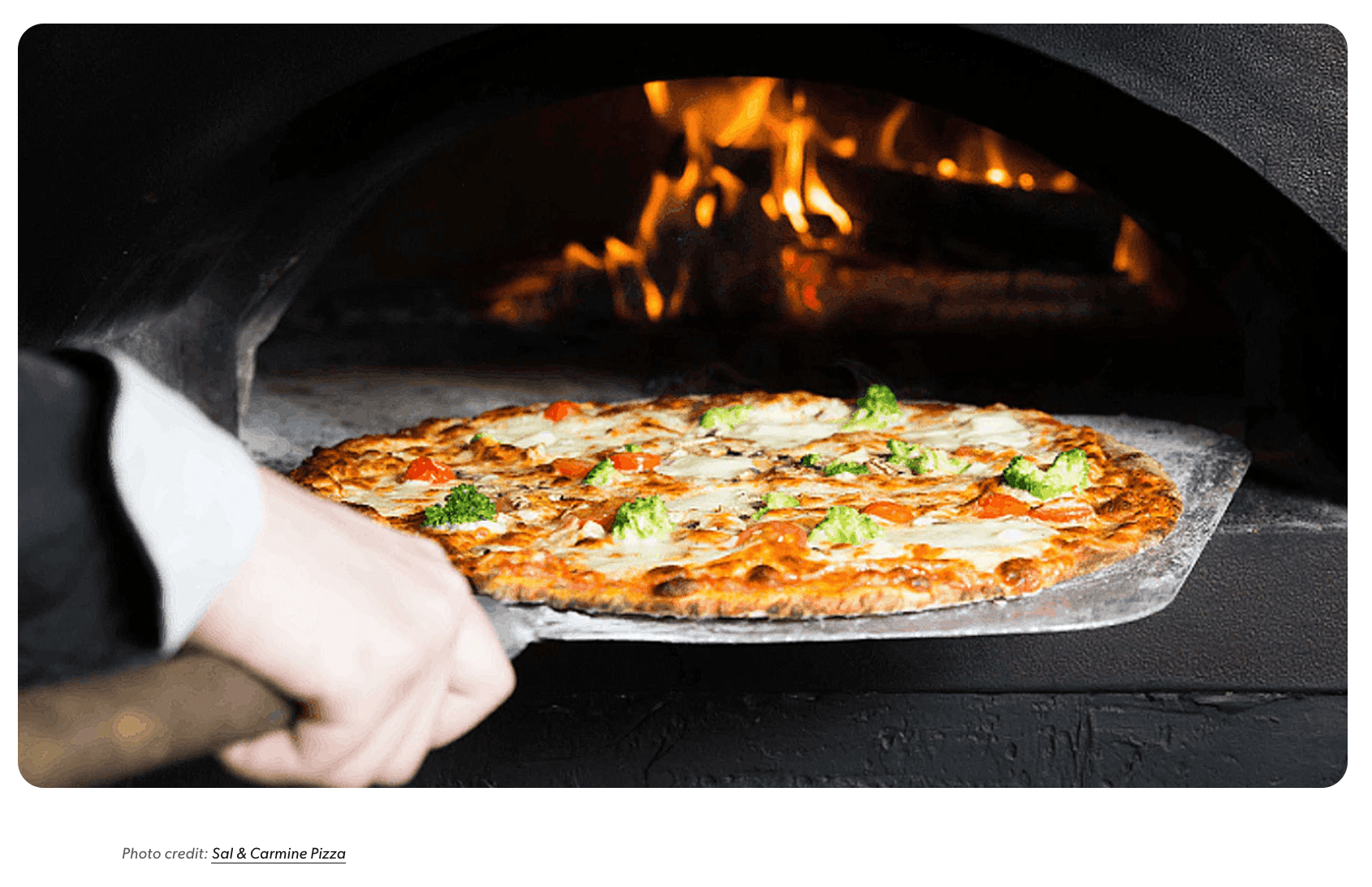
New York City pizza: simple on paper, iconic in practice
New York City has long been able to stand on its own as a global culinary destination. The city’s signature foods are familiar even to people who have never set foot in a borough: hot dogs, bagels, pastrami, cheesecake—and, towering over the landscape, New York City pizza. It is the food that fits into daily life as easily as it fits into a paper plate: something you can grab on the go, snack on in the subway, or unbox on the stoop.
For all the pride and reputation attached to it, NYC pizza can sound almost ordinary when you describe it. The classic format is straightforward: a large, thin base topped with tomato sauce and mozzarella cheese. There’s no requirement for elaborate toppings or novelty combinations. In many ways, the point is restraint. The style is often compared to Neapolitan pizza, but New York’s version has its own identity—one built on technique, heat, and a few local details that devotees take seriously.
One of the most repeated beliefs among connoisseurs is that New York City tap water contributes to the character of the dough. Whether you treat that as a crucial ingredient or a piece of local lore, the end result is familiar to anyone who has held a slice: a crust thin enough that it is usually folded in half. The process behind that slice also matters. Traditional, extremely hot ovens—often coal-fired and reaching around 800 degrees—are part of the story at several landmark shops. Another key detail is the handling of the dough: hand-stretching rather than rolling, a technique that helps preserve the texture and structure that define the classic slice.
New York City is said to have more than 75,000 pizzerias, and even that number can feel like it doesn’t capture the scale of the city’s pizza culture. With so many options, the challenge is not finding pizza; it is finding the kind of pizza that reflects the traditions people mean when they talk about an “authentic” New York slice. Not all slices are created equal, and the places below are frequently cited as essential stops for anyone who wants to understand the city’s pizza history through a bite.
What “authentic” tends to mean in NYC slice culture
Before getting into specific pizzerias, it helps to define what authenticity looks like in this context. In New York City, the word is often tied to a handful of recurring themes rather than a single rigid rule. The pizza itself is typically thin, large, and easy to fold. The topping philosophy leans classic—tomato sauce and mozzarella as the baseline—and the craft is rooted in repetition and consistency.
Several of the city’s most celebrated shops are known for old-school ovens, including coal-fired ovens that produce a distinctive smokiness. Others are defined by a narrow focus: pizza is the only thing on the menu, or the shop’s identity is built around a specific style, such as a traditional eight-slice pie or a square Sicilian slice. Even the service model can be part of what makes a place feel “New York,” whether that means slices available for quick eating or whole pies only, with lines that signal demand.
Core ingredients, minimal distraction: a thin base, tomato sauce, mozzarella.
Technique over gimmick: hand-stretched dough, high-heat ovens.
Texture and fold: a slice that holds together when folded.
Heritage and continuity: long-running institutions alongside newer shops that honor tradition.
Lombardi’s: a foundational name with a coal-fired legacy
Any conversation about New York City pizza history tends to begin in Little Italy. Lombardi’s is frequently described as the first pizzeria in the United States, and it remains in operation in a location that can feel surprisingly modest given its reputation. The shop dates back to 1905, founded by Neapolitan pizza chef Gennaro Lombardi.
Part of Lombardi’s enduring identity is tied to its original coal-fired oven, credited with producing pizzas that carry an impeccably smoky character. The format is classic and substantial: the obligatory 16-inch pie cut into eight slices. For many visitors, Lombardi’s is not only a meal but a way to touch the early timeline of pizza in America—proof that a dish now considered everyday food once arrived as a specific craft rooted in immigrant tradition.
Totonno’s: a Lombardi’s offshoot that became a destination
The influence of Lombardi’s is visible across the city’s pizza landscape, and one of the clearest examples is Totonno’s in Coney Island. The pizzeria was founded in 1924 by Anthony Pero, a former Lombardi’s chef who branched out on his own. That lineage is part of what makes Totonno’s feel like a continuation of an earlier era rather than a reinvention.
Its ingredients and reputation are both part of the story. The tomatoes are said to come from Italy, while the accolades come from closer to home and beyond. Totonno’s has been touted as the best pizza in NYC by prominent guides and publications, a level of praise that has helped turn a neighborhood institution into a pilgrimage spot for serious pizza fans.
John’s on Bleecker Street: coal-fired consistency and a classic room
There is a recognizable template to the city’s most traditional pizzerias, and John’s on Bleecker Street fits neatly into it. Founded in 1929, it is another coal-fired institution, producing hundreds of pizzas a day from the same style of oven that anchors so many New York legends.
One of the defining features of John’s is the way it structures the experience: it does not sell pizza by the slice. That decision shapes everything from the pace of the meal to the lines that often form outside. The wait can be part of the ritual, and the payoff is a setting that feels like a traditional Italian pizzeria, complete with wooden booths and Art Deco flourishes. John’s is also known for a formidable roster of regular celebrity clientele, a detail that underscores how a straightforward pie can become a cultural marker in a city that thrives on reputations.
Patsy’s: an East Harlem landmark with slice history
Patsy’s opened in 1933 and has become an East Harlem landmark. It has welcomed a steady stream of entertainers, politicians, and New York Yankees over the years, yet it is also described as keeping a neighborhood restaurant atmosphere. That balance—famous, but still local—is part of what makes certain New York institutions feel authentic rather than simply popular.
Patsy’s also occupies a notable place in slice culture: it was the first authentic pizzeria to sell pizza by the slice. In a city built around quick meals and street-level convenience, that innovation mattered. The model worked, and it helped reinforce the idea that great pizza could be both high quality and highly accessible. One detail often repeated in the restaurant’s lore is that Frank Sinatra chose Patsy’s as his favorite spot to grab a slice, a small anecdote that adds to the shop’s long-running mystique.
Di Fara’s: a later arrival with a chef-driven signature
Not every “authentic” New York pizzeria comes from the earliest decades of the 20th century. Di Fara’s opened in 1965, founded by Dom De Marco, and is sometimes described as a relative newcomer compared with the city’s oldest names. Yet it has achieved a stature that places it comfortably among the essential stops.
Like many of New York’s most revered pizza places, Di Fara’s can be easy to miss from the outside—one of those locations you might walk past without realizing what it means to so many diners. The pizzeria has been singled out as a personal favorite by chefs and critics, including Anthony Bourdain, and its signature is described in specific, sensory terms: fresh basil, plenty of olive oil, and a three-cheese topping of mozzarella, Parmigiano-Reggiano, and fior di latte (a type of mozzarella made from cow’s milk). The combination suggests a shop that treats simplicity as a canvas, adding nuance through ingredient quality and careful assembly rather than sheer quantity.
Sal & Carmine: a neighborhood slice shop with a focused menu
Another recurring characteristic of the classic New York pizzeria is a narrow menu—sometimes pizza and little else. Sal & Carmine on the Upper West Side is an example of that approach, described as a neighborhood landmark where the emphasis stays squarely on the pies.
Part of its appeal is the sense of personality behind the counter: a splash of theater paired with slices that keep people coming back. The pizza itself is remembered for a soft, tender crust and a perfectly seasoned topping—qualities that speak to balance rather than extremes. In a city where pizza is often eaten quickly, the kind of slice that “lingers long in the memory” tends to be the one that gets the fundamentals right.
Joe’s: no-nonsense slices with citywide reach
Joe’s has been called “Best of New York” by a major city magazine, and it has expanded to five locations across the city. The original shop opened in 1975 in Greenwich Village, and its staying power reflects a common New York pattern: a straightforward product delivered consistently, day after day, becomes a landmark through repetition as much as through hype.
At Joe’s, the options include a traditional Neapolitan-style eight-slice pie as well as a distinctive Sicilian-style square pie. The tone is unashamedly no-nonsense, a quality that can read as its own form of confidence. That straightforwardness has not prevented Joe’s from drawing an astonishing list of patrons from show business and the A-list—another reminder that in New York, the most famous food is often the most practical food.
Best Pizza: a newer shop channeling Brooklyn tradition
While many of the city’s most iconic pizzerias date back nearly a century, New York’s pizza culture is not frozen in time. Best Pizza is a more recent entry, opening in 2010, yet it frames itself as part of a longer heritage. The shop serves superlative 20-inch pies cooked in a wood-fired oven and described as having a Brooklyn twist.
Its inspiration draws on traditional Brooklyn slice joints and the owner’s Sicilian “nona,” linking personal history with neighborhood style. At the same time, the shop’s origin reflects how pizza can move into a more explicitly gourmet space: it is the brainchild of Frank Pinello, a Culinary Institute of America graduate. The result, as described, is a slice that evokes a rich local pizza heritage while acknowledging that even a classic format can be approached with a chef’s training and ambition.
How to approach a pizza “pilgrimage” in a city of endless options
With so many pizzerias in New York City, choosing where to eat can feel like a test of local knowledge. One practical way to think about it is to treat each shop as a different expression of the same basic idea. Some places emphasize history and coal-fired smokiness. Others emphasize the slice itself—fast, accessible, and built for everyday life. A few focus on specific ingredient signatures or on keeping the menu tightly limited so that the craft stays concentrated.
If you want origin stories: prioritize the oldest institutions and their long-running ovens.
If you want the classic slice culture: include a shop known for selling by the slice and for a foldable, thin crust.
If you want style variety within tradition: look for places offering both an eight-slice pie and a square Sicilian option.
If you want a modern shop that still feels rooted: seek out newer pizzerias that explicitly draw from neighborhood slice-joint traditions.
Why NYC-style pizza remains the standard-bearer
Pizza is often described as America’s favorite dish, and NYC-style pizza as the standard-bearer. The idea that a single pizzeria could help spark a national and international obsession stands as one of the more striking American food stories. Yet the history, the celebrity sightings, and the debates about ovens and water all fade once you have a slice in your hand. What remains is the immediate experience: the balance of sauce and cheese, the way the crust bends without breaking, the heat and aroma that signal a pie made in a serious oven.
For anyone hungry for pizza in New York City, the temptation is always to settle for whatever is nearest. But the city’s most enduring pizzerias have lasted because they offer something specific: a consistent expression of a style that has become inseparable from New York itself. If you want to taste the genuine article, skip the generic outlets and focus on the places that have defined—and continue to define—what an authentic NYC slice can be.