
Italian Braciole: A Hearty Beef Roll Simmered in Tomato Sauce
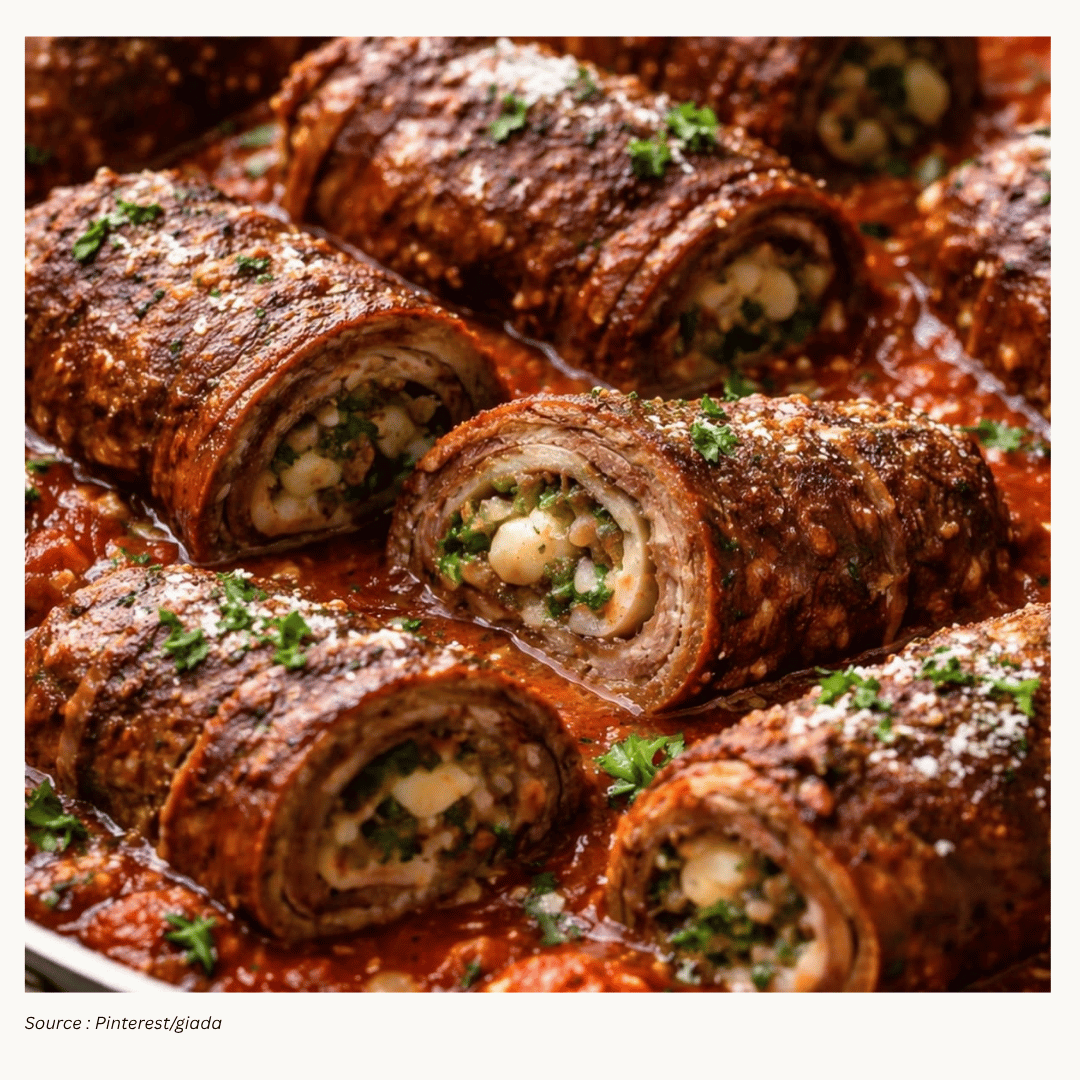
A classic Italian comfort dish built around slow cooking
Italian braciole is one of those dishes that feels like it was invented for long, unhurried meals. At its core, it’s thin meat rolled into a tight spiral around a flavorful stuffing, seared until browned, and then simmered slowly in tomato sauce until the beef turns tender and the filling melds into every bite. The version here centers on beef braciole: flank steak pounded thin, filled with a mixture of breadcrumbs, cheese, herbs, and pancetta, then cooked gently in marinara enriched with red wine.
The appeal is straightforward. You get the deep savoriness of browned beef, the richness of cheese, the aromatic lift of herbs, and the salt-and-crisp punch of pancetta—all carried by a simple tomato sauce that becomes more concentrated as it cooks. It’s the kind of meal that’s as at home at a holiday table as it is on a weekend when you want something hearty and satisfying. Many people like to serve braciole with pasta, but it also pairs naturally with crusty bread for soaking up the sauce.
What braciole is—and why beef is the most common choice
Braciole is an Italian dish built around thin slices of meat that are rolled (roulade-style) with a filling—commonly cheese and breadcrumbs—then seared and slow cooked in sauce. While versions can be made with beef, chicken, or pork, beef braciole is often considered the most common approach. Traditional cuts often include beef rump, top round, or bottom round. In this method, flank steak is used and works well because it can be pounded thin, rolled tightly, and transformed by slow cooking.
That slow-cooking step is not just a technique; it’s the point. Braciole is meant to simmer for hours, allowing the sauce to take on the flavor of the meat and the meat to soften and become sliceable. When it’s done, the roll is typically cut on a diagonal to show the spiral of filling inside, then served with sauce spooned over the top.
The flavor structure: breadcrumbs, cheese, herbs, and pancetta
The filling in this braciole is designed to be savory and balanced. Breadcrumbs provide body and absorb the rendered fat and aromatics, while cheese adds richness and a salty depth. Herbs—parsley is used here—bring freshness. Pancetta plays a special role: cooked until crispy, it contributes both texture and a concentrated pork flavor, and the fat left behind becomes the foundation for sautéing onions, garlic, and red pepper flakes.
That sequence matters. Cooking pancetta first builds a base layer of flavor in the pan. Adding onions, red pepper flakes, and garlic afterward lets them soften in the pancetta drippings, creating a mixture that’s aromatic rather than raw. Once that mixture is folded into the breadcrumb-and-cheese blend, the filling becomes cohesive and seasoned throughout.
Store-bought marinara vs. homemade: a practical approach
Braciole is often associated with homemade tomato sauce, but this approach leans on a store-bought marinara for convenience. The reasoning is simple: while homemade sauce can be used, the difference may not feel significant enough to justify the extra work for every cook, especially because much of the final flavor comes from browning the steak and adding red wine. If you have a marinara you already like, using it can make the recipe more accessible without changing the essential character of the dish.
In other words, the sauce is important, but it’s not the only source of flavor. The sear on the beef, the wine, and the slow cooking all contribute to the final depth. If you prefer to make your own sauce, you can, but it isn’t required for a satisfying result.
Choosing wine: cook with what you would drink
Red wine is added after browning the beef and is brought to a boil before the marinara goes in. The guidance here is straightforward: use a quality dry red wine—something you’d be willing to drink. Two options often used are Chianti or Pinot Noir. The wine helps lift browned bits from the pot and adds complexity to the sauce as it cooks down with the marinara.
How the oven method works (step-by-step overview)
This dish is built in stages: crisping pancetta, assembling the filling, preparing the steak, rolling and tying, browning, then slow cooking in sauce. Below is a clear overview of the process described.
- Step 1: Cook pancetta until crispy with oil in a pan. Add onions, red pepper flakes, and garlic, and cook until the onions are translucent.
- Step 2: Mix breadcrumbs, cheeses, parsley, and pepper. Stir in the pancetta mixture.
- Step 3: Pound flank steak to about 1/4-inch thickness.
- Step 5: Roll the flank steak tightly from the short end. Secure with butcher’s twine and season with salt and pepper.
- Step 6: Brown the beef in olive oil in a Dutch oven until browned on all sides.
- Step 7: Add wine, bring to a boil, and stir in marinara.
- Step 8: Cover and bake at 350°F for 2 hours, basting every 30 minutes. Remove twine, slice diagonally, and serve with sauce.
One practical note that came up in discussion: the braciole is cooked in the oven with the lid on for the initial cooking period. After that, the lid can be removed and the dish cooked a bit longer to finish. This helps the sauce reduce while the meat continues to tenderize.
Slow cooker option: same idea, different timeline
If you’d rather not use the oven, a slow cooker can work just as well. The key is to keep the browning step: searing the stuffed beef roll before it goes into the slow cooker adds flavor that you won’t get from slow cooking alone. After browning, transfer the braciole to the slow cooker, add sauce, and cook on low for 6–8 hours. A high setting can also be used for a shorter cook (3–4 hours), but the low-and-slow approach aligns with the spirit of the dish.
This flexibility makes braciole a useful recipe to have on hand when you want a set-it-and-forget-it dinner, or when you need a dish that can cook while you focus on other tasks.
Make-ahead and storage: built for planning
Braciole is well suited to make-ahead cooking. You can assemble the rolls and refrigerate them for up to 24 hours before cooking. That means you can do the pounding, filling, rolling, and tying in advance, then cook when you’re ready to serve.
It also stores well after cooking. Keep braciole in an airtight container with sauce in the refrigerator for up to 4 days, or freeze it for up to 3 months. Since the meat is stored in sauce, it’s easier to keep it moist during reheating.
Reheating without drying out the meat
Because braciole is a rolled cut of beef, it benefits from gentle reheating. Warming it slowly in a saucepan over low heat with extra marinara helps maintain moisture. Alternatively, you can cover and bake at 300°F until heated through. Microwaving is best avoided, as it can dry out the meat and make the slices less tender.
Serving ideas: what to put on the table with braciole
Braciole is commonly served with pasta, and for good reason: pasta is an easy way to carry the sauce and round out the meal. But it’s not the only option. Anything that can soak up tomato sauce works well alongside the sliced beef. If you’re planning a menu, here are several side ideas that pair naturally with the dish:
- Garlic mashed cauliflower
- Goat cheese polenta
- Crispy roasted potatoes
- Goat cheese risotto
- Cream cheese mashed potatoes
Whichever side you choose, the goal is the same: give the sauce somewhere to go. Braciole is generous with sauce, and that’s part of the pleasure.
Ingredient flexibility: small changes that still keep the spirit
Like many traditional dishes, braciole has plenty of variations. Even within this approach, you can mix up parts of the filling to suit your preferences, as long as you keep the basic structure: breadcrumbs for body, cheese for richness, herbs for freshness, and a salty element such as pancetta for depth.
One common question is about cheese choices. Cheese is important to the filling, but if you don’t like parmesan, the recipe can still work with another cheese. Using an equal amount of provolone is one workable swap mentioned, keeping the filling cohesive and flavorful while changing the taste profile.
Cooking temperature and sauce texture: what to expect
During oven cooking, the sauce can thicken as it reduces, especially when uncovered toward the end. Some cooks notice the sauce bubbling vigorously at 350°F, and the reduction can make it thicker than expected. That said, the reduction also helps concentrate flavor and supports the long cook that breaks down the meat. If you prefer a looser sauce at serving time, having extra marinara on hand can help when reheating or plating.
Why this dish earns repeat status
Braciole has a reputation for being impressive at the table—sliced diagonally, it shows off the spiral of filling—yet the technique is approachable once you understand the sequence. Crisp pancetta, build the filling, pound and roll the steak, tie it securely, brown it well, then let time do the rest in the oven or slow cooker. It’s also a recipe that fits real life: you can assemble it a day ahead, cook it gently, store leftovers in sauce, and reheat without sacrificing tenderness.
Most importantly, it delivers the kind of hearty, saucy comfort that makes people want to make it again—whether served with pasta, paired with potatoes or polenta, or simply eaten with bread that can mop up every last spoonful of marinara.