
Crispy, Flaky Scallion Pancakes With Sesame Roux and Ginger-Soy Dip
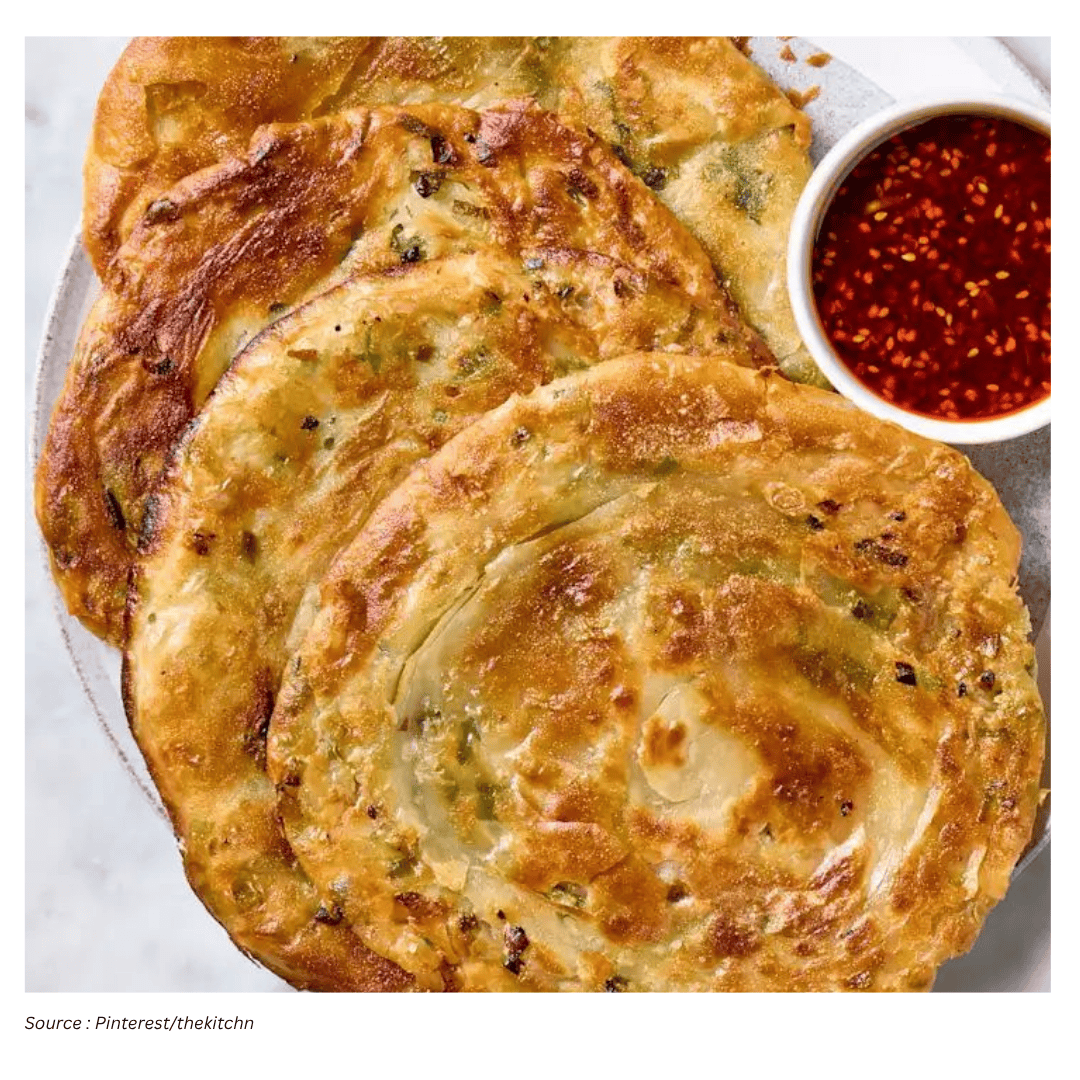
A takeout favorite you can make at home
Scallion pancakes have earned their place as a beloved savory staple: crisp at the edges, flaky through the center, and packed with the sharp freshness of scallions. They’re also wonderfully practical—easy to carry, easy to share, and satisfying whether you eat them straight from the pan or later at room temperature. If you’ve only had them as a restaurant treat, the layered, pastry-like texture can seem difficult to recreate. But the method is far more approachable than it looks once you understand what creates the layers.
This recipe leans on two key techniques to make the process reliable for home cooks: a hot water dough that stays soft and easy to roll, and a sesame oil roux that helps laminate the dough into delicate sheets. The result is a pancake that’s crisp and golden outside, tender inside, and full of savory aroma—especially when paired with a spicy ginger soy dipping sauce.
What makes these pancakes flaky: hot water dough + sesame roux
The signature texture of scallion pancakes isn’t about leavening or batter. It’s about layers. Two choices in this method are designed specifically to help you build those layers without complicated pastry techniques.
- Hot water dough: Mixing scalding hot water into flour inhibits gluten formation. Less gluten means the dough becomes soft, pliable, and easier to roll thin—exactly what you want when you’re creating multiple layers.
- Sesame oil roux: A quick-cooked mixture of equal parts flour and fat is often used as a thickener in sauces and soups, but here it plays a different role. Spread across the dough, the roux acts like a thin barrier of fat and starch between sheets of dough. During cooking, steam helps separate those layers, producing a flaky, airy bite. Toasted sesame oil brings the most intense flavor, and it perfumes the dough throughout.
The shaping process—rolling into a rectangle, spreading roux, adding scallions, rolling into a cylinder, coiling into a spiral, then rolling again—creates the laminated structure. It’s a straightforward routine that becomes faster with each pancake.
Ingredients: keep them simple, but choose good quality
Because scallion pancakes use only a handful of ingredients, quality matters. Each component has a clear job: flour builds the structure, hot water creates tenderness, sesame oil carries aroma, scallions bring punch, and peanut oil delivers crisp frying. The dipping sauce adds brightness, heat, and balance.
- For the dough: all-purpose flour, sea salt, scalding hot water
- For the sesame roux: sesame oil (toasted for the most intense flavor), all-purpose flour, salt
- For the filling: plenty of fresh scallions, sliced
- For frying: peanut oil
- For the dipping sauce: soy sauce, rice vinegar, fresh ginger root, minced Fresno or Serrano chile pepper, brown sugar
The brown sugar is not meant to make the sauce sweet; it’s there to help balance the heat from the chile and the sharpness of vinegar and ginger.
Step-by-step: scallion pancakes from dough to golden crust
The workflow is easiest if you think of it in four stages: make and rest the dough, cook and cool the roux, mix the dipping sauce, then shape and pan-fry the pancakes.
1) Mix and rest the hot water dough
- Combine 2 cups flour and ½ teaspoon salt in a stand mixer bowl.
- Using the dough hook on low speed, slowly pour in the hot water until fully incorporated.
- Increase to medium speed and knead until the dough comes together in a mass.
- Remove the dough, briefly knead by hand, and shape into a ball.
- Wrap in plastic and let rest for at least 30 minutes.
This rest is not optional. It gives the dough time to relax, making it easier to roll thin without springing back.
2) Make a quick sesame oil roux
- While the dough rests, heat the sesame oil in a small skillet over medium heat.
- Add the remaining ½ cup flour and ½ teaspoon salt.
- Cook and stir for 1 minute to form a roux.
- Transfer to a small bowl to cool.
This is a blonde roux—briefly cooked. It’s designed to spread smoothly and help create layers, not to develop a darker, toasted roux flavor.
3) Stir together the ginger-soy dipping sauce
- In a small bowl, combine soy sauce, rice vinegar, fresh ginger, minced Fresno or Serrano chile, and brown sugar.
- Set aside.
This sauce benefits from time. Making it ahead allows the chile to infuse the mixture more deeply.
4) Divide, fill, roll, coil, and roll again
- Unwrap the dough and knead briefly.
- Divide into 6 even pieces.
- Shape each piece into a ball, keeping them covered with plastic or a damp tea towel so they don’t dry out.
- Roll one dough ball into a rectangle about 10 inches long and 5 inches tall.
- Spoon 1 tablespoon of the roux onto the dough and spread into an even layer, leaving a small border.
- Sprinkle 2 tablespoons sliced scallions over the roux, keeping them near the left and bottom edge.
- Roll up the dough from the bottom of the long side to form a long cylinder.
- Flatten gently to seal and pinch closed the left end.
- Starting with the pinched end, roll the cylinder into a spiral.
- Gently press down and cover.
- Repeat until all 6 spirals are formed.
That spiral is your layer-building engine. Each coil stacks thin sheets of dough separated by roux and scallion, setting you up for a flaky interior once the pancake hits the hot pan.
5) Roll into pancakes and prep for frying
- Cut 6 squares of parchment or waxed paper, about 8 inches across.
- Roll each spiral into a pancake about 6 inches in diameter.
- Layer pancakes on a platter with parchment or waxed paper between them.
- Line a second plate with paper towels for draining.
Using paper between pancakes helps prevent sticking and makes it easier to move them to the skillet one at a time.
6) Pan-fry until puffed and crisp
- Heat a cast iron or similar non-stick skillet over medium heat.
- Add about 2 tablespoons peanut oil to coat the bottom of the pan.
- When the oil is hot, lower in one pancake and rotate it with chopsticks or tongs to coat with oil.
- Cook for 2 minutes until the first side is golden brown.
- Flip carefully.
- Cover the pan and cook for another minute; the steam helps the layers puff.
- Uncover and continue cooking until golden, flipping again as needed until the pancake is puffed and crisp.
- Adjust heat so the pancake browns without burning.
- Transfer to the paper towel-lined plate.
- Repeat, adding about 2 tablespoons peanut oil before cooking each pancake.
The covered minute is a small step with a big payoff. It encourages steam to expand between the laminated layers, enhancing the flaky, airy texture.
Serving: wedges, dip, and share
Once all pancakes are cooked, cut them into wedges and serve warm with the dipping sauce. They’re also enjoyable at room temperature, which makes them a strong option for gatherings where food may sit out briefly before being eaten.
If you’re serving guests, consider putting out a few condiments alongside the dipping sauce so everyone can customize each bite.
Make-ahead and storage tips for hosting
One of the most practical advantages of scallion pancakes is how well they fit into a make-ahead plan. You can do the mixing, resting, shaping, and rolling in advance, then cook right before serving so they hit the table hot and crisp.
- To freeze raw pancakes: Make the dough, fill, shape, and roll out the pancakes. Freeze them with layers of parchment paper between each pancake in a zip-top bag. Thaw and cook as needed.
- To store leftovers: Refrigerate cooked pancakes, then re-crisp and reheat in a lightly oiled skillet or an air fryer.
- To make the sauce ahead: The dipping sauce improves when made in advance because the chiles have time to infuse the other ingredients. Store in an airtight jar or glass container for up to 5 days, and bring to room temperature before serving.
These steps make it easier to serve scallion pancakes as a party staple without being tied to the stove from start to finish.
Why a roux works here (and what “laminated” really means)
Roux is often associated with classic cooking traditions, where it’s used to thicken soups and sauces by cooking equal parts flour and fat so starch can absorb the fat. In this recipe, the roux is cooked briefly and then used as a functional layer in the dough.
That connects directly to the idea of a laminated dough: thin sheets of dough separated by fat. When heat hits the dough, steam becomes trapped between layers, creating separation and lift. Some laminated doughs rely on repeated folds with cold butter. Here, the sesame roux provides a similar layer-separating effect, while the shaping method—roll, coil, roll—creates the stacked structure needed for flakiness.
The payoff is a pancake that feels almost pastry-like: crisp on the outside, tender within, with scallion flavor threaded through each layer.
A reliable template for savory, shareable comfort food
Scallion pancakes are a reminder that “restaurant-style” doesn’t have to mean complicated. With a hot water dough for easy rolling, a quick sesame roux for lamination, and a punchy ginger-soy dip, you can turn a short ingredient list into something deeply satisfying. Make them for a snack, a meal, or a gathering—then plan on making another batch, because they tend to disappear quickly.