
Cheesy French Onion Pot Roast: A Comforting Braise with Caramelized Onions, Gruyère, and Garlic Croutons
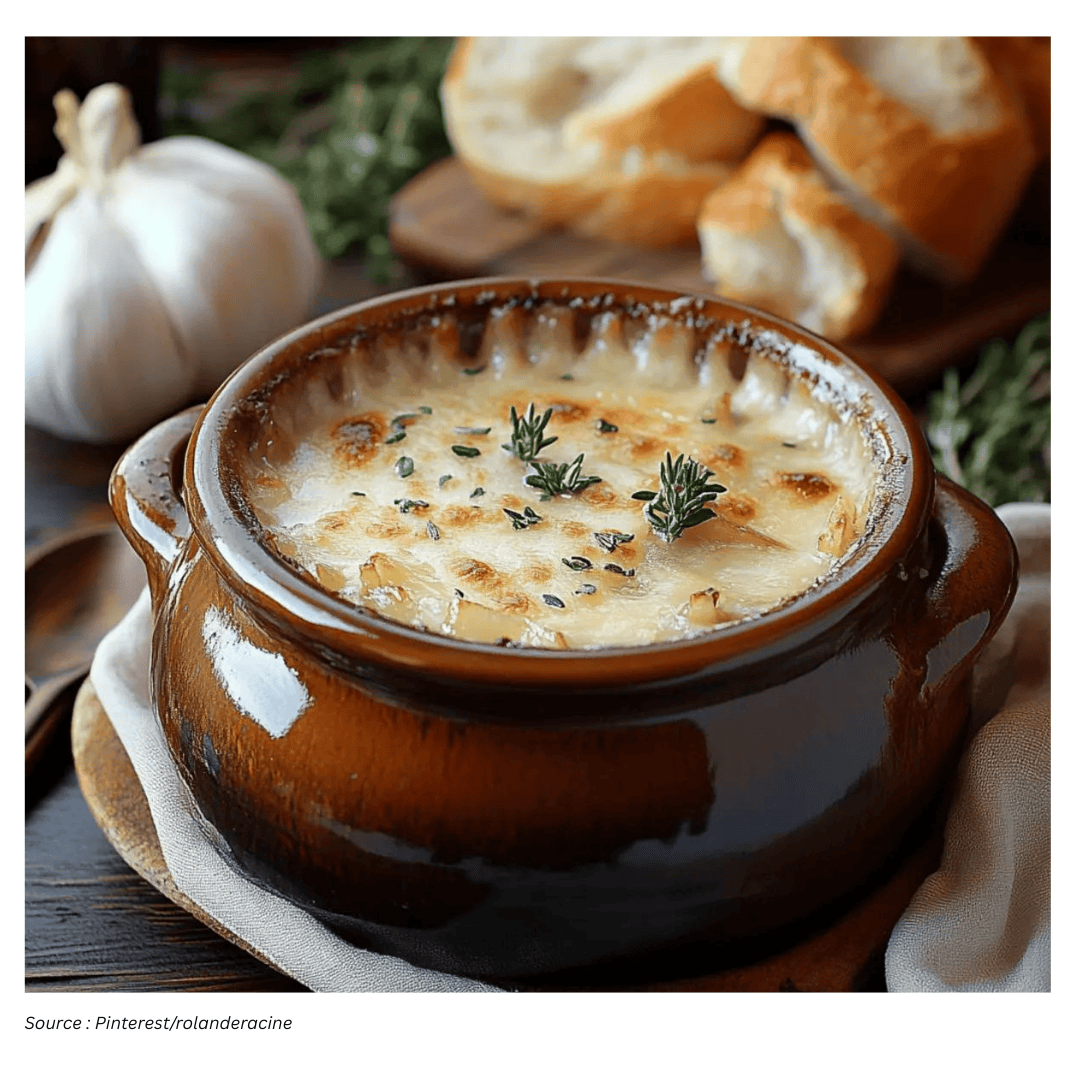
A French onion twist on classic pot roast
French onion soup has a reputation for being deceptively simple: a short ingredient list that demands real time and attention to develop its signature depth. Many home cooks love ordering it but hesitate to make it themselves, largely because the onions require patience to reach that dark, sweet, richly savory stage. This pot roast approach borrows the most memorable elements of the soup—deeply caramelized onions, a savory broth-like base, and the unmistakable pairing of toasted bread and melted, nutty cheese—and builds them into a single braised dish.
The result is a comforting centerpiece that still feels a little elevated. It’s the kind of meal that fits a relaxed Sunday gathering, but it can also read as dinner-party worthy, thanks to the layered flavors and the dramatic final broil of Gruyère over croutons. The extended cooking time is not a shortcut; it’s the point. Low, steady heat coaxes tenderness from the beef and transforms a large volume of onions into a concentrated, golden-brown tangle that tastes both sweet and savory.
Why this dish works: time, onions, and a finishing flourish
At its core, the method is a familiar pot roast technique: brown the meat for flavor, then braise it in liquid at a moderate oven temperature for several hours until it becomes very tender. What makes this version distinctive is how it borrows the “French onion” flavor profile. The onions are cooked until deeply golden brown, then deglazed with dry white wine and balsamic vinegar. Those ingredients lift the sweetness of the onions with tang and complexity, while the browned bits at the bottom of the pot are stirred back into the sauce for extra savoriness.
Fresh thyme sprigs cook alongside the beef as it braises, adding a subtle herbal note that complements both the meat and the onions. And instead of serving the roast with a separate bread component, the dish is finished with olive-oil-and-garlic brushed baguette slices baked into crisp croutons. After the beef is shredded into chunks, the croutons and shredded Gruyère are layered on top and broiled until the cheese is browned and bubbly—an unmistakable nod to the classic soup’s broiled-cheese cap.
Ingredients at a glance
This recipe is built from a short list of familiar items, but each one plays a specific role in the final flavor and texture. The quantities matter, especially for the onions: three pounds may look excessive at first, but they cook down dramatically during caramelization.
- Boneless beef chuck roast (about 3–4 pounds)
- Yellow onions (about 3 pounds)
- Unsalted butter
- Olive oil
- Dry white wine (a French selection if you want to keep it “authentic”)
- Balsamic vinegar
- Beef broth (as the braising liquid)
- Fresh thyme sprigs
- Baguette slices (for croutons)
- Minced fresh garlic (for brushing the baguette)
- Shredded Gruyère cheese
- Kosher salt and black pepper
Choosing the right cut: chuck, and an alternative
Picking beef for a pot roast is different from choosing a cut meant for dry roasting. Pot roast relies on browning followed by a long braise in liquid. Over hours, moist heat and steady temperature give connective tissue time to break down, turning a tougher, well-exercised cut into something tender and satisfying. Fat content matters too, because it contributes to richness and body in the finished sauce.
A boneless beef chuck roast is a strong match for this style of cooking. It comes from the shoulder region and typically has a high degree of marbling, which helps it stay juicy and flavorful during the long braise. Using a boneless roast also makes the final step—pulling or shredding the meat—cleaner and tidier.
If you prefer a different balance of richness, another option is bottom round (often labeled “rump roast”). Like chuck, it has connective tissue that can soften and become gelatinous with enough time in the oven, but it generally has less marbling. That can mean a less fatty sauce while still delivering plenty of beefy flavor. It also tends to be better for slicing than pulling, though a long enough cooking time can make either approach workable.
Step-by-step method (with timing cues)
This dish is best approached as a sequence: build flavor in stages, then let the oven do the heavy lifting. The onions are not a quick sauté; they’re a slow transformation. The beef is not rushed; it’s braised until it yields easily. And the final broil is brief but important, providing texture and that classic French onion finish.
- In a large Dutch oven or braiser, heat 2 tablespoons of olive oil and 2 tablespoons of butter over medium-high heat.
- Pat the roast dry and season it with 1 teaspoon salt and 1/2 teaspoon pepper on both sides.
- Add the roast to the hot pan and cook for about 5 minutes on each side to form a crust.
- Remove the roast to a platter and set it aside.
- Reduce the heat of the pot to medium and add 2 tablespoons of olive oil and 2 tablespoons of butter.
- Add the onions and the remaining 1 teaspoon of salt. Cook for about 30 minutes, stirring occasionally, until they’re deep golden brown.
- Deglaze the pan with the wine and balsamic vinegar, stirring up any brown bits at the bottom. Cook until most of the liquid has evaporated.
- Return the roast to the pot with the thyme sprigs and cover with a lid.
- Place the pot in the oven and braise for about 3 1/2 hours, until the meat is very tender.
- While the roast cooks, line a small baking tray with parchment paper and arrange the baguette slices in an even layer.
- Mix together the remaining olive oil and minced garlic, then brush it onto the baguette slices.
- Bake the baguette slices on a top rack of the oven for about 15 minutes, until golden and crisp. (This step can also be done after removing the pot from the oven.)
- Once the meat is tender, remove the pot from the oven and shred the beef into chunks.
- Top the shredded beef with the croutons and shredded Gruyère, then return the pot to the oven and broil until the cheese is browned and bubbly.
- Serve in shallow bowls with your favorite sides.
What to watch for: caramelization, deglazing, and tenderness
The most important visual cue in this recipe is the onions. They start out sharp and pungent, but as they cook, their natural sugars deepen in color and flavor. The goal is a deep golden-brown stage that signals sweetness and complexity rather than raw bite. Stirring occasionally helps them color evenly without scorching.
Deglazing is the next key moment. When the wine and balsamic vinegar hit the pot, they loosen the browned bits from the bottom—those concentrated pieces of flavor created during browning and caramelization. Cooking until most of the liquid has evaporated keeps the flavor focused before the braise begins.
Finally, the beef should be “fall-apart tender” at the end of the braise. The long oven time allows connective tissue to break down, which is what turns a tough cut into something you can shred into chunks. If the meat is not yet yielding easily, it simply needs more time in the braising environment.
The signature finish: garlic croutons and broiled Gruyère
French onion soup is often remembered for its top layer: toasted bread and melted cheese that stretches and browns under the broiler. This pot roast keeps that experience intact by turning baguette slices into crisp croutons brushed with olive oil and minced fresh garlic. Once the beef is shredded, those croutons go right on top, followed by a generous layer of shredded Gruyère.
The final broil does more than melt cheese. It creates contrast—crisp edges on the bread, bubbly browned spots on the Gruyère, and a rich, saucy base underneath. Served in shallow bowls, each portion can capture all three elements: tender beef, jammy onions, and that classic French onion-style topping.
Serving ideas and the “homey yet elegant” effect
This dish is designed to be hearty, and it yields generous servings. Presented in shallow bowls, it can feel both rustic and refined: the shredded beef and onions are undeniably comforting, but the broiled Gruyère finish adds a restaurant-like touch. It’s also flexible in mood. It can be the centerpiece of a candlelight dinner, or it can anchor a casual gathering where everyone helps themselves.
Because the flavors are built slowly—browned beef, caramelized onions, tangy deglazing, and a long braise—the final taste tends to read as layered: savory, buttery, nutty, and sweet all at once. That complexity is what makes the recipe feel special without requiring unusual ingredients.
Storing leftovers safely and reheating without losing texture
Given the generous yield, leftovers are likely. Food safety and texture both benefit from careful cooling. It’s important to cool the entire dish completely before refrigerating so a warm center doesn’t linger at a temperature where bacteria can form. One practical approach is to portion the pot roast into individual containers that can be sealed and refrigerated. Portions can include the croutons and cheese as well.
To reheat, transfer a portion to a microwave-safe dish and heat it through. If you prefer to restore some of the topping’s texture, you can reheat leftovers in an oven-safe dish and give the croutons and cheese a brief broil at the end. That final step helps bring back the browned, bubbly finish that defines the French onion effect.
Making it ahead: a practical plan for a smoother serving day
This recipe also lends itself to advance preparation. You can cook the roast completely, then allow it to cool before refrigerating. The entire pot can be stored in the fridge for up to five days. When you’re ready to serve, gently reheat the roast and onions in the oven. Prepare the croutons, layer them on the reheated meat, add the cheese, and finish with a broil.
This approach keeps the final moments—crisping the bread and browning the Gruyère—fresh and dramatic, while shifting the long braise to an earlier, more convenient time. It’s a straightforward way to make a slow-cooked dish feel effortless when guests arrive or when you want dinner ready without starting from scratch.
A satisfying hybrid of two comfort-food classics
French onion soup and pot roast each have their own appeal: one is defined by caramelized onions and a broiled cheese lid, the other by the slow transformation of beef into something fork-tender and deeply savory. This recipe brings them together in a way that emphasizes what each does best. The onions cook down into a concentrated, golden-brown sweetness; the beef braises until it can be shredded into juicy chunks; and the final layer of garlic-toasted baguette and broiled Gruyère ties the whole dish back to the soup that inspired it.
For anyone who loves the idea of French onion soup but wants a more substantial centerpiece, this pot roast offers a clear path: take the time, build the layers, and let the oven deliver the kind of depth that only slow cooking can provide.