
Bakery-Style Banana Bread With Pecans, Nutmeg, and a Moist Sour Cream Crumb
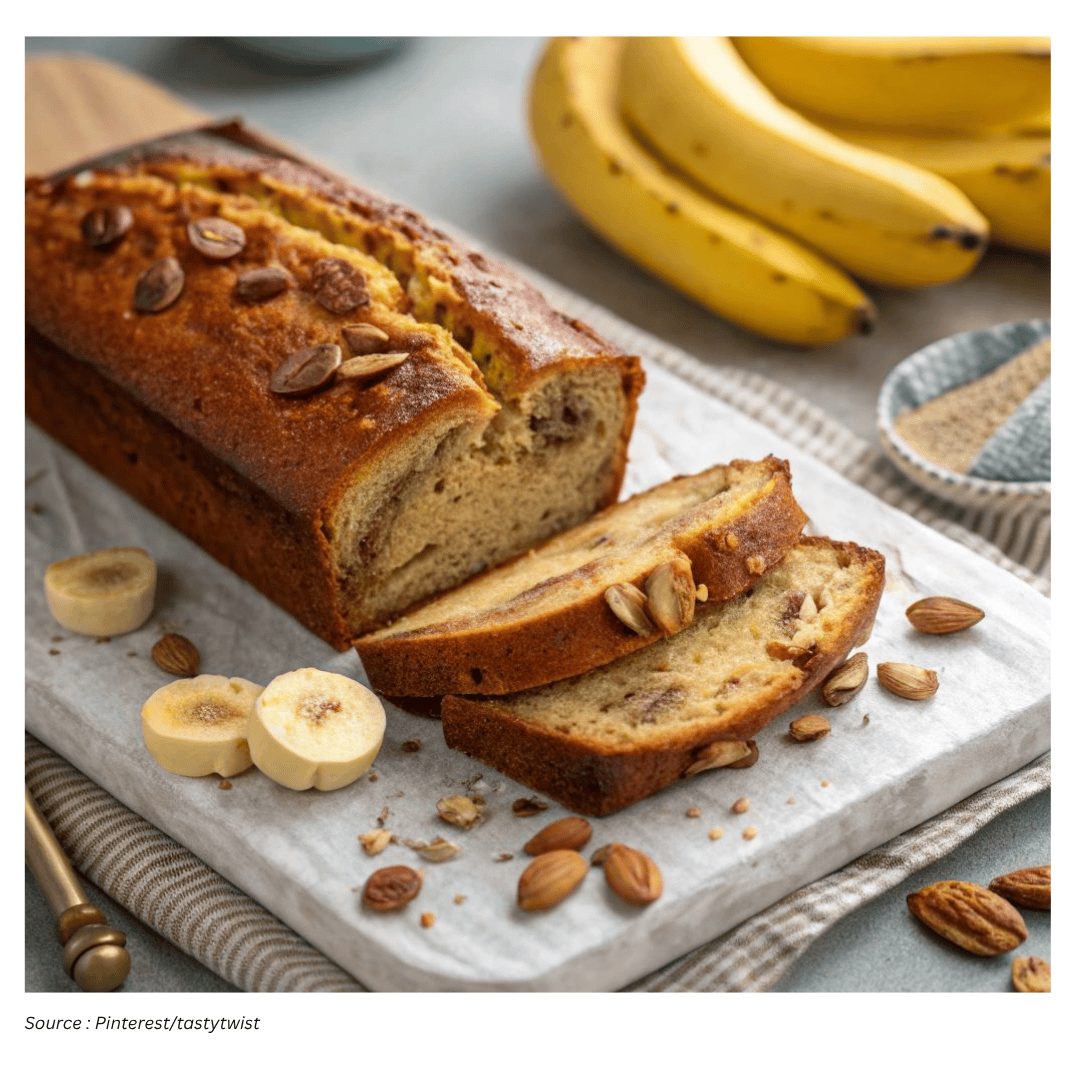
A quick bread that eats like cake
Banana bread sits in a rare sweet spot in home baking: it’s approachable, forgiving, and deeply satisfying. As a quick bread, it doesn’t require yeast or long proofing times, yet it delivers the kind of comfort usually associated with cake. It also has a practical side—this is one of the most enjoyable ways to use bananas that have moved past their prime. When bananas turn soft and heavily speckled, their sweetness becomes more pronounced, and their texture becomes ideal for mashing into a batter that bakes up moist and tender.
Still, even devoted home bakers know the allure of a bakery loaf: the glossy, golden-brown top; the generous height; the promise of a slice that feels special enough for dessert but welcome at breakfast. The recipe presented here aims for that “window-case” appeal while remaining very doable in a home kitchen. Developed by Julie Kinnaird—a former pastry chef who once baked this loaf daily for a full-service bakery—this version is designed to rival the prettiest bakery banana bread, both in flavor and texture.
What makes this loaf taste “bakery-worthy”
The foundation is classic banana bread flavor—mellow, sweet, and aromatic—but the supporting ingredients are what push it into bakery territory. Butter and light brown sugar contribute richness and a deeper, caramel-like sweetness. Chopped raw pecans bring a buttery crunch that contrasts with the soft crumb. And instead of leaning solely on banana for character, the recipe adds ground nutmeg along with rum extract and vanilla extract, a combination chosen as a nod to Bananas Foster. The result is a loaf with warmth and complexity, still familiar but noticeably elevated.
Texture is just as important as flavor. To create a tender crumb and extra moist slice, the recipe uses full-fat sour cream. Beyond moisture, sour cream adds a gentle tanginess that balances the sweetness of ripe bananas and brown sugar. It also plays a functional role in the batter: its acidity interacts with the baking soda to help the bread rise properly while maintaining a soft, cake-like interior.
Start with the right bananas (and know what to avoid)
Overripe bananas are not a minor detail here—they’re the key ingredient. Extra-ripe bananas have developed more sugars, and their silky-soft flesh mashes easily into a smooth base for the batter. Compared with firm yellow bananas (or anything with a hint of green), very ripe fruit is more moist and more flavorful, which directly translates to a better loaf.
If you don’t already have ripe bananas waiting on the counter, many grocery stores keep brown-flecked bananas that are past their prime for snacking but perfect for baking. When choosing them, pay attention once you peel: signs of mold or strong off-odors can indicate the fruit is no longer edible. In other words, you want bananas that are deeply speckled and soft, not spoiled.
Ingredient roles: why each component matters
This loaf is built from familiar pantry and fridge staples, but each item has a clear job to do. Understanding those roles helps you bake with more consistency and makes it easier to adapt the recipe later.
- Unsalted butter (softened): Provides richness and structure, and creams smoothly with sugar to start the batter.
- Light brown sugar: Preferred here over white granulated sugar for its caramel-like flavor and its ability to contribute additional moisture.
- Eggs (room temperature): Room-temperature eggs combine more easily, and they help prevent softened butter from chilling and curdling during mixing.
- Full-fat sour cream (room temperature): A “secret weapon” for extra moistness and a tender crumb; also adds tang and acidity for leavening.
- All-purpose flour: The main structure-building dry ingredient.
- Baking soda: Reacts with the acidity of sour cream and brown sugar to help the loaf rise.
- Sea salt: Balances sweetness and sharpens overall flavor.
- Ground nutmeg: A distinctive warm spice that pairs well with rum and vanilla extracts.
- Rum extract and vanilla extract: Adds dessert-like aroma and depth, echoing the Bananas Foster inspiration.
- Chopped raw pecans: Adds a sweet, buttery flavor and a toothsome bite throughout the loaf.
Preparation: set yourself up for a clean release and even baking
A bakery-style loaf should look as good as it tastes, and the setup matters. The method begins with preparing a 9 x 5-inch loaf pan: oil it, then line it with a 9 x 16-inch strip of parchment paper so the parchment hangs over both long sides. Those overhanging “handles” make it easy to lift the loaf out later without damaging the sides or bottom.
Another small step with a big payoff is planning for temperature. The recipe specifically calls for eggs and full-fat sour cream to be at room temperature. That’s not fussy—it’s practical. When cold eggs hit softened butter, the mixture can seize and become curdled, which can affect how smoothly the batter comes together. Room-temperature ingredients mix more evenly, helping you achieve the tender, uniform crumb the recipe is aiming for.
Step-by-step method (with the key mixing cue)
The mixing method follows a classic quick-bread approach: cream fat and sugar, add eggs, then incorporate dry ingredients. The most important cue is to avoid overmixing once flour is added. The instructions emphasize mixing on low speed and stopping as soon as everything is combined.
- Oil a 9 x 5-inch loaf pan and line it with a 9 x 16-inch parchment strip, leaving overhang on both long sides.
- Cream together softened unsalted butter and light brown sugar using a hand-held or stand mixer.
- Add the eggs one at a time, mixing well after each addition.
- In a separate bowl, combine all-purpose flour, baking soda, sea salt, and ground nutmeg.
- Add the dry ingredients to the banana mixture on low speed, mixing just until combined.
- Fold in the chopped raw pecans (as directed in the recipe’s ingredient list and method flow).
- Transfer the batter to the prepared pan.
- Bake for 55–60 minutes, or until a tester inserted into the center comes out clean.
- Remove from the oven and cool on a rack for 30 minutes.
- Use the parchment overhang to lift the bread out of the pan.
- Cool completely, then slice and serve with your preferred toppings.
Once cooled, the loaf is delicious on its own, and it also welcomes simple additions like a bit of butter or jam. Because the crumb is described as cake-like, it can move easily between breakfast and dessert without feeling out of place.
Flavor variations and mix-ins (use the loaf as a template)
One reason banana bread remains so popular is its flexibility. This particular recipe is designed with a strong base—banana, brown sugar, butter, sour cream, nutmeg, rum and vanilla extracts, and pecans—yet it can also serve as a template for personal touches that stay within the same cozy flavor family.
If you want to deepen the butter notes, an optional variation is to use brown butter. Browning butter adds nuttiness and a toasted fragrance. However, because moisture evaporates during browning, the recipe developer advises compensating by adding 2 tablespoons of water to the batter when substituting brown butter for fresh butter.
Nuts are another easy place to experiment. Walnuts or hazelnuts can stand in for pecans while keeping the loaf’s flavor profile aligned. If you choose hazelnuts, the guidance is to roast them first and remove as much of their papery skins as possible to avoid bitterness in the finished bread.
Chocolate is also a natural partner for banana. For a sweeter, more dessert-like loaf, 1/2 cup of milk, semi-sweet, or dark chocolate chips can be stirred in with the nuts at the end.
Finally, the spice can be adjusted. Cinnamon is suggested as a delicious swap for nutmeg if you prefer a different warm-spice character.
Why banana bread can taste better on day three
Fresh banana bread is hard to resist, especially once it’s cool enough to slice. But this loaf comes with an interesting note from the recipe developer: her favorite day to eat it is often day three. As the bread “ages,” the gluten structure and proteins relax, moisture migrates from the bananas and sour cream into the crumb, and the flavors mature and meld together. The practical upside is that the loaf becomes especially easy to slice cleanly, making it more versatile for repurposing.
Storage and freezing: keep it moist, not soggy
Proper storage is essential for maintaining that bakery-style tenderness. The key is to let the bread cool completely before wrapping. Wrapping too soon can trap steam and lead to a soggy texture, particularly in the center where heat lingers.
Once fully cool, wrap the loaf tightly in plastic wrap and store it in the refrigerator. When stored properly, it will stay fresh for up to a week under refrigeration.
Freezing is also an option for longer storage. The loaf can be frozen for up to four months. For best results, add an extra layer of plastic wrap or place the wrapped loaf in a zip-top bag before freezing. An added perk: even freezing for a single day can create a similar “rested” texture effect, helping the loaf slice neatly and feel more cohesive.
Serving ideas and smart ways to use leftover slices
Because this recipe makes a large loaf, leftovers are likely—and that’s a good thing. The bread’s cake-like quality and moist crumb make it well suited to a range of second-day (and third-day) uses that go beyond simply toasting a slice.
- Banana bread pudding: Toast cubes of banana bread, toss them with a mixture of eggs, cream, and a bit more brown sugar, then bake and serve with a scoop of vanilla ice cream.
- Banana bread French toast: Soak slices and fry them whole, or cut into wide strips to make French toast sticks for dipping in syrup.
- Savory-sweet toast: Top a toasted slice with soft cream cheese and a sprinkle of bacon crumbles for a salty contrast.
- Decadent sandwich: Make a banana bread and Nutella sandwich when you want a dessert-like treat.
Whether you keep it simple with butter or turn it into something more elaborate, this loaf is designed to deliver a bakery-level experience at home: classic banana aroma, warm spice, sweet pecans, and a moist, tender crumb that holds up beautifully over time.