
Luxurious Lobster Bisque: A Scratch-Made, Special-Occasion Soup
A seafood soup with a distinct personality
Seafood soups come in many forms, and the differences matter when you’re deciding what to cook—and how much time you want to spend. On one end of the spectrum are chowders and stews, which tend to be thick, chunky, and rustic. On the other are bisques, which are generally smoother and more delicate in texture, often built around a pureed base and finished with cream for body and sheen.
Lobster is one of the most classic foundations for a bisque, but quality can vary widely depending on how it’s made. Some store-bought or restaurant versions can feel flat or overly heavy, while others can be surprisingly serviceable in a pinch. Still, if you’re aiming for a truly elegant bowl—something velvety, deeply flavored, and worthy of a special occasion—homemade lobster bisque stands apart.
This recipe is designed as a labor of love: it takes time, includes a long ingredient list, and asks you to build flavor in layers. Yet the steps themselves are approachable. As developer Patterson Watkins puts it, making stock is straightforward, and turning that stock into bisque is just as doable. The one genuinely tough part is physical rather than technical: dealing with the lobster shells.
Why this bisque feels luxurious
The defining feature of this version is its scratch-made lobster stock. That stock becomes the backbone of the soup, carrying the flavor of the shells along with aromatic vegetables and herbs. From there, the bisque is enriched with cream and balanced with sherry, then thickened and blended until smooth.
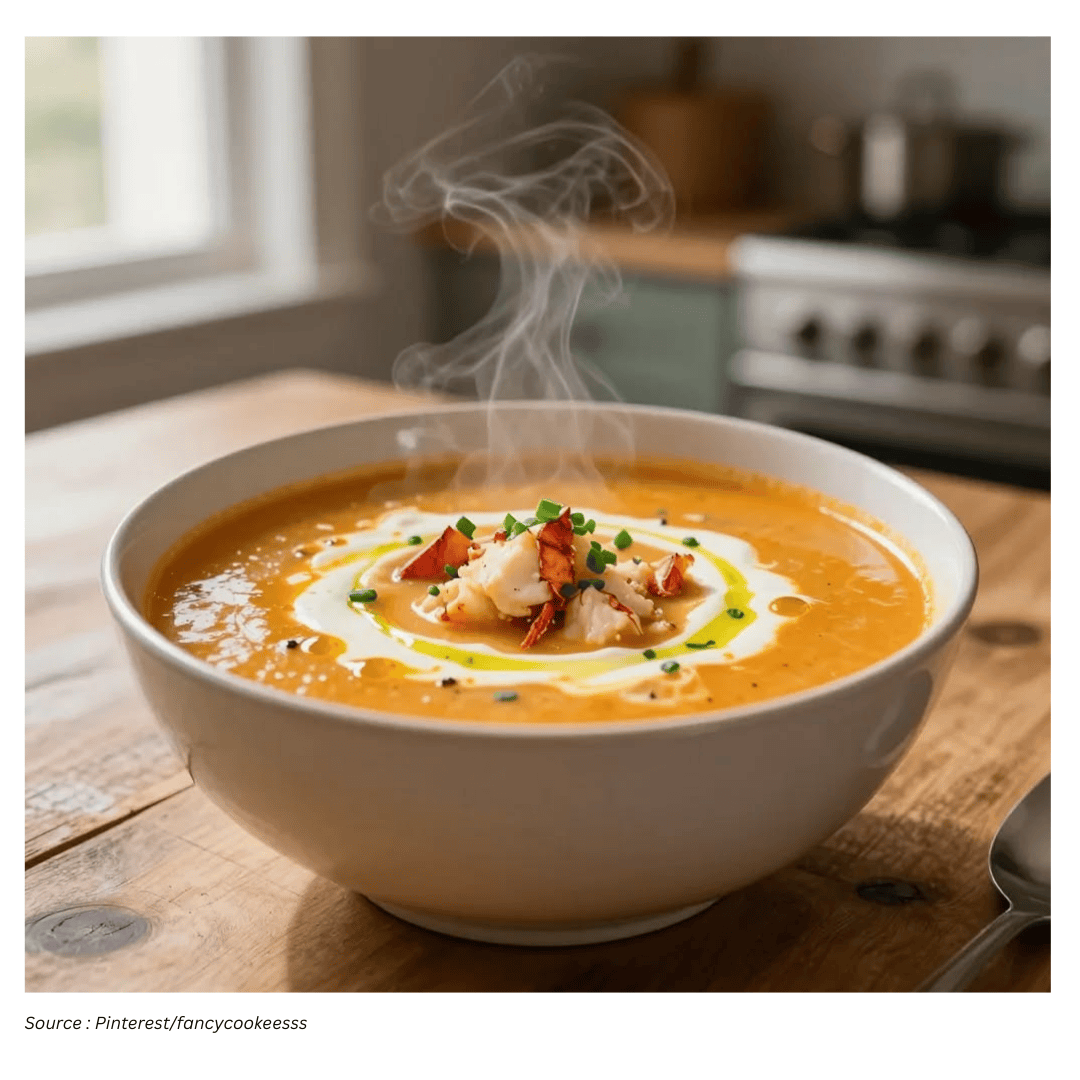
Watkins describes the finished base as silky, with a clear balance between cream, sherry, and lobster stock. The aromatics contribute “rustic vegetal elements” from the mirepoix, while the sherry adds subtle baking-spice notes. The lobster and cream bring buttery richness—exactly the kind of texture and flavor profile people associate with a restaurant-style starter.
It’s also a soup that rewards careful pacing. The process includes simmering, sautéing, deglazing, whisking, and blending—each step contributing to a final texture that’s cohesive rather than separated, and flavorful rather than one-note.
Ingredients: 17 items, many of them familiar
This bisque uses 17 ingredients total. That number can look intimidating at first glance, but many are pantry staples or common produce items you can pick up quickly. The ingredient list is split naturally into two parts: what goes into the stock and what finishes the bisque.
For the lobster stock, you’ll use lobster tails plus a mix of vegetables, herbs, and seasonings: celery, carrots, shallots, garlic, bay leaves, thyme, tarragon, black peppercorns, salt, and white pepper.
For the bisque itself, you’ll build on that stock with butter, sherry, flour, heavy cream, tomato paste, and chives (with tarragon also used as a garnish).
- Lobster tails (shells used for stock; meat reserved for serving)
- Celery, carrots, shallots, garlic
- Bay leaves, thyme, tarragon
- Black peppercorns, salt, white pepper
- Butter, sherry, flour
- Heavy cream, tomato paste
- Chives (plus tarragon for garnish)
The structure of the recipe is simple: extract flavor from shells and aromatics to make stock, then use that stock to create a thickened, blended soup that’s finished with lobster meat and herbs.
Step-by-step: making the lobster stock
The stock is where the bisque earns much of its depth. You’ll begin by separating the shells from the lobster meat. The meat is cut into bite-sized pieces and refrigerated until it’s time to serve, while the shells go into the pot to infuse the water with lobster flavor.
To build the stock, combine the shells with celery, carrot, shallot, garlic, bay leaves, thyme, tarragon, peppercorns, salt, and white pepper. Cover with water and bring everything to a boil over high heat. Then cover the pot, reduce the heat to low, and cook for 30 minutes, stirring occasionally.
Once the stock is finished simmering, drain it through a fine mesh strainer. Discard the shells and the strained solids, and set the stock aside. The recipe yields about 6 cups of stock for the bisque.
- Separate shells from lobster meat; refrigerate the meat after cutting it into bite-sized pieces.
- Place shells, vegetables, herbs, peppercorns, salt, and white pepper in a pot.
- Cover with water; bring to a boil.
- Cover, reduce heat, and simmer 30 minutes, stirring occasionally.
- Strain through a fine mesh strainer; discard shells and solids; reserve stock.
This stage can feel like the “project” portion of the recipe, but it’s mostly hands-off once the pot is simmering. The key is giving the shells and aromatics time to do their work.
Step-by-step: turning stock into bisque
With stock ready, the bisque comes together by building a flavor base, thickening it, and blending it smooth. Start by melting butter in a large pot over medium heat. Add shallot, celery, carrots, and garlic, then sauté for about 3 minutes to soften and release aroma.
Next, deglaze with sherry and bring it to a simmer. Cook, stirring occasionally, until the sherry has almost completely evaporated—about 5 minutes. This step concentrates the flavor while keeping the soup balanced.
Sprinkle in the flour, stir it into the vegetables, and cook for 1 minute more. Then add the reserved lobster stock (about 6 cups), heavy cream, and tomato paste, whisking to combine. Bring the mixture to a low simmer and cook for about 20 minutes, whisking frequently, until the soup thickens and the vegetables become very tender.
To achieve the signature bisque texture, transfer the soup to a blender and blend until smooth (working in batches if necessary). Return the blended soup to the pot and warm it over medium-low heat until reheated.
- Melt butter in a large pot over medium heat.
- Sauté shallot, celery, carrots, and garlic for 3 minutes.
- Deglaze with sherry; simmer until nearly evaporated (about 5 minutes).
- Add flour; stir and cook 1 minute.
- Whisk in stock (about 6 cups), cream, and tomato paste.
- Simmer 20 minutes, whisking frequently, until thickened and very tender.
- Blend until smooth; return to pot and reheat gently.
At this point, the bisque base should be cohesive and silky—rich without being cloying, and aromatic without tasting like a single dominant ingredient.
Serving: lobster in the bowl, bisque over the top
This recipe is designed so the lobster meat is portioned directly into bowls, with the hot bisque ladled over it. That approach keeps the lobster front and center and avoids overcooking it in the pot. To finish, garnish with chopped chives and tarragon.
- Divide the reserved lobster meat between serving bowls.
- Ladle the hot bisque over the lobster.
- Garnish with chopped chives and tarragon.
The result is a rich, deeply flavorful soup with a smooth texture—an elegant starter for a special meal, including occasions like Valentine’s Day.
Using precooked lobster (and other prep notes)
One practical advantage here is that the bisque is made with precooked lobster, which removes one prep step. If you prefer, you can cook your own lobster and store it in the refrigerator for up to three days before making the soup.
If you’re using whole lobsters instead of tails, you may want to rinse the shells before they go into the pot. This helps avoid lingering bits of tomalley (described as the green substance that makes up the lobster’s liver and pancreas). The process remains similar: boil the shells briefly, then cover and simmer. If foam or solids rise to the surface, skim them off. Any remaining residue will be removed when you strain the stock.
These details don’t change the overall method, but they can make the stock-making step feel cleaner and more controlled—especially if you’re working with whole lobsters and want a clear, well-strained base.
Make-ahead strategy: split the work across days
Because bisque can feel like a big undertaking, it helps to break the recipe into manageable stages. The easiest place to do that is the stock. You can make the lobster stock ahead of time and refrigerate it for up to five days before using it in the soup. If you want to plan even further ahead, the stock can also be frozen and used months later.
This flexibility turns the recipe from an all-day event into a more relaxed cooking experience. On the day you plan to serve, you can focus on the bisque itself—sautéing, deglazing, simmering, blending—without also needing to start from zero.
What to serve with lobster bisque
Lobster bisque is often treated as a starter, and this version is well suited to that role. It’s rich and smooth, which makes it feel celebratory even in small portions. Served first, it can set the tone for a special-occasion dinner or a romantic date-night meal.
If you want to continue with a classic “surf-and-turf” approach, the bisque can lead into a well-prepared steak. If you’d rather keep the meal lighter, the bisque can also function as the main course, paired with a green salad and chunks of French or Italian bread for dipping.
- As a starter: serve in smaller bowls before a main course.
- As a main: pair with a green salad and French or Italian bread for dipping.
- For a celebratory pairing: follow with a steak for a surf-and-turf-style meal.
An unexpected pairing: blueberry muffins
Alongside classic pairings, there’s also a regional serving idea that leans into sweet-and-savory contrast. In Maine, the restaurant at the Dolphin Marina in Harpswell serves blueberry muffins with seafood soups like lobster stew and fish chowder. While it may sound unusual at first, the logic is familiar: sweet-and-savory combinations remain popular because they can highlight different aspects of a dish.
Watkins notes that muffins work just as well with a delicate bisque as they do with thicker chowders and stews—and she speaks from experience. She describes the combination of a toasty blueberry muffin with salted butter alongside creamy, rich lobster bisque as surprisingly tasty.
If you’re serving this bisque for guests, a muffin pairing can also be a conversation starter. It keeps the meal feeling special without requiring complicated extra dishes, and it plays nicely with the bisque’s creamy texture and layered flavor.
Planning a themed meal (including playful options)
This bisque fits neatly into a traditional special-occasion menu, but it can also be part of a more playful theme. The same text that highlights blueberry muffins with seafood soup also mentions another unconventional pairing: chili served with cinnamon rolls, described as a Midwestern combination. If you enjoy “odd couple” menus, you could lean into both pairings for a lighthearted Valentine’s theme—blueberry muffins with bisque, plus chili with cinnamon rolls—where the sides can double as dessert.
Whether you keep it classic or make it whimsical, the bisque remains the centerpiece: a smooth, rich soup built on homemade stock, balanced with sherry and cream, and finished with lobster and herbs.
A final note on effort and reward
Homemade lobster bisque is not the fastest soup you can make, and it asks you to handle shells, strain stock, and blend carefully. But it’s also the kind of recipe where the work translates directly into the bowl. With a silky base, aromatic depth from mirepoix and herbs, and richness from lobster and cream, it’s designed to feel elegant—whether served as a refined first course or as the main event with bread and salad.
If you’re looking for a cooking project that ends in something celebratory and restaurant-worthy, this scratch-made approach delivers exactly that.