
High-Protein English Muffin Breakfast Sandwiches for Busy Mornings
A practical breakfast that still feels like real food
Getting a satisfying breakfast on the table can be harder than it sounds. Mornings tend to be rushed, and even when you want something nutritious, it’s easy to fall into the trap of grabbing whatever is fastest rather than what will actually keep you going. Breakfast sandwiches are a reliable solution because they’re portable, filling, and flexible enough to work as a late breakfast or an early lunch on busy days.
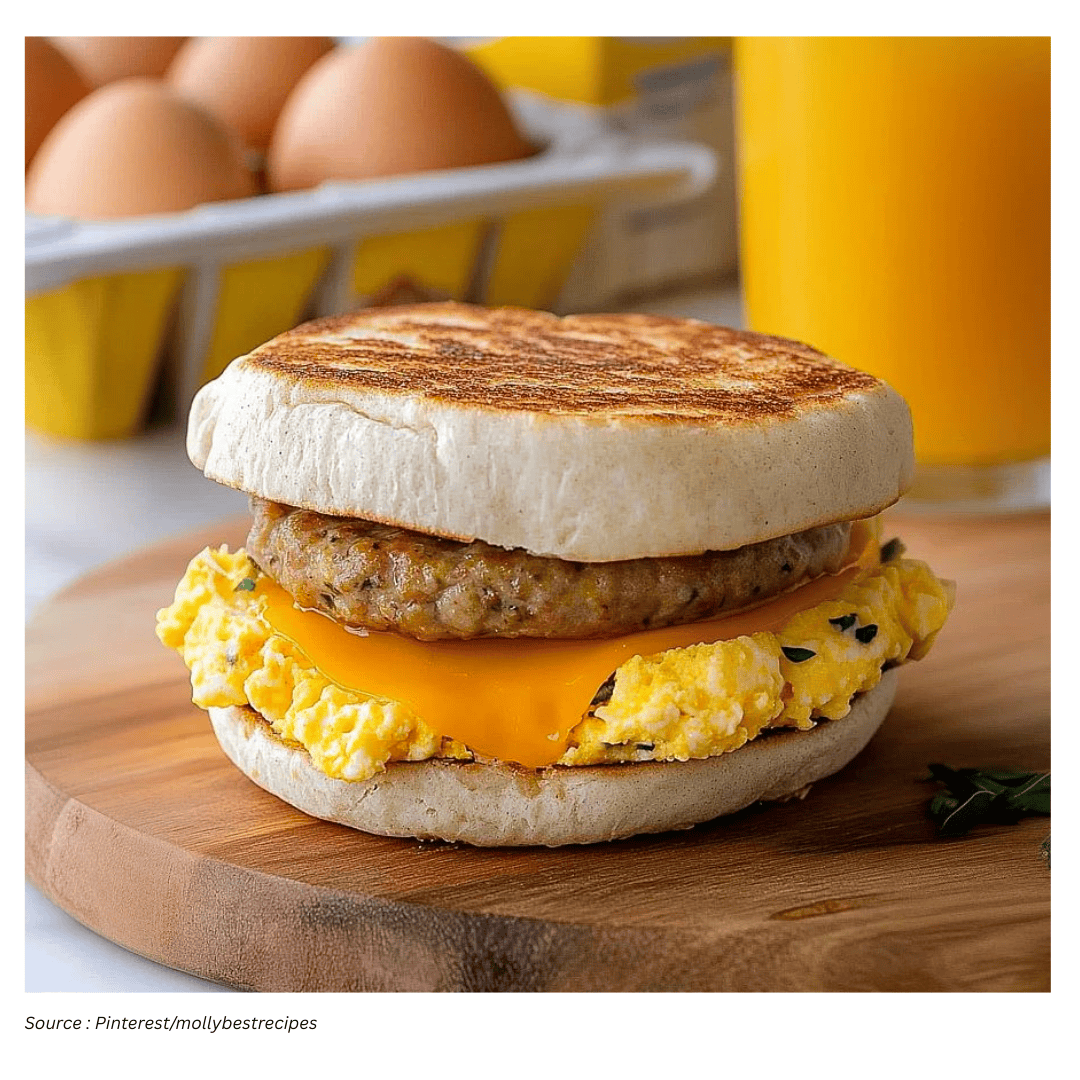
This high-protein English muffin breakfast sandwich is designed with that reality in mind. It combines a baked egg layer enriched with cottage cheese and mozzarella, crisped prosciutto for a savory bite, and provolone that melts into the warm layers. Everything is stacked on English muffins—whole-grain if you want to lean into the protein-and-fiber angle—then briefly baked so the cheese turns gooey and the muffin stays pleasantly toasty.
The flavor profile is intentionally bold for a breakfast: peppery arugula, tangy sun-dried tomatoes, fresh basil and chives, plus smoked paprika and garlic powder in the egg base. It’s the kind of sandwich that tastes like you put in more effort than you actually did, especially because the egg portion is baked as a single slab and then cut into neat rectangles for easy assembly.
What makes this sandwich “high-protein”
The protein boost here doesn’t come from one ingredient alone. Instead, it’s built into multiple layers so the sandwich feels balanced rather than heavy. Whole-grain English muffins can contribute roughly 5 to 6 grams of protein on their own, and the egg layer is fortified by blending eggs with whole-milk cottage cheese and shredded mozzarella. Prosciutto adds another protein-rich component while also bringing crisp texture, and provolone finishes the sandwich with a melty, savory cap.
There’s also a texture advantage to the approach. Blending cottage cheese into the eggs creates a creamy, cohesive mixture that bakes into a tender layer rather than a dry scramble. The additional cheeses help the egg bake hold together so it can be sliced cleanly and handled like a sandwich “patty,” which is especially helpful if you plan to meal prep.
Ingredients overview
This recipe is built from familiar breakfast components, but the method and seasoning make it feel more substantial. Here’s what goes into the sandwich, organized by function.
- Base: Whole-grain English muffins (or another variety you prefer), plus olive oil for brushing before toasting.
- Egg bake: Large eggs, whole-milk cottage cheese, shredded mozzarella, smoked paprika, garlic powder, sea salt, and freshly cracked black pepper.
- Mix-ins and topping: Chopped arugula, sun-dried tomatoes, chives, basil, and a thin layer of finely grated Parmesan on top before baking.
- Protein and finish: Thin slices of prosciutto (pan-fried until crisp) and slices of provolone for melting.
Olive oil plays a small but useful role: brushed onto the split muffins, it seeps into the nooks and crannies and helps the surface toast evenly. That little step can make the difference between a sandwich that tastes assembled and one that tastes intentionally made.
Step-by-step method (with a meal-prep mindset)
The workflow is straightforward: bake the eggs as one layer, toast the muffins, crisp the prosciutto, then assemble and melt. The key is that the egg portion is made in a blender, which keeps the texture uniform and reduces prep time.
- In a high-speed blender, combine the eggs, cottage cheese, mozzarella, smoked paprika, garlic powder, sea salt, and black pepper.
- Blend just until smooth, about 20 seconds. Avoid overprocessing.
- Pour the egg mixture into a prepared baking dish.
- Sprinkle arugula, sun-dried tomatoes, chives, and basil over the egg mixture, then use the tip of a knife to gently swirl and distribute.
- Top with a thin layer of finely grated Parmesan.
- Bake for about 30 minutes, until the eggs are set and lightly browned.
While the egg bake finishes, you can set up the rest of the sandwich components. Lining a sheet pan with parchment paper keeps cleanup easier and makes it simple to move the muffins in and out of the oven.
- Line a sheet pan with parchment paper.
- Split the English muffins and place the halves side-by-side on the pan.
- Brush olive oil onto the cut sides of the muffins.
- When the eggs come out of the oven, increase the oven temperature to 400 F.
- Toast the muffins for about 5 minutes, then remove from the oven.
Prosciutto is cooked separately on the stovetop. Crisping it adds texture that contrasts with the soft egg layer and melted cheese.
- Heat a medium skillet and add prosciutto slices a few at a time.
- Cook on both sides until crisp, then transfer to a plate. Repeat until all slices are cooked.
Once the egg bake has cooled enough to handle, it’s trimmed and portioned for assembly.
- Trim off the browned edges of the baked eggs and discard.
- Cut the remaining egg slab into 6 rectangles.
- Place one egg rectangle on each English muffin bottom.
- Add a portion of crispy prosciutto on top of the egg.
- Top with a slice of provolone.
- Add the muffin tops, then return the tray to the oven.
- Bake for 5 to 7 minutes, just until the cheese melts.
That final bake is short, but it’s what turns separate components into a cohesive sandwich. The provolone melts into the prosciutto and egg, and the muffin warms through without drying out.
Protein-focused ingredient choices and smart substitutions
The ingredient list is intentionally chosen to maximize both the quality and variety of proteins. Still, the sandwich can handle a few adjustments depending on what you have available or what textures you prefer.
English muffins: Whole-grain versions typically offer a bit more protein than standard white muffins, but you can use whichever kind you like best. The structure of an English muffin—especially its craggy interior—works well with olive oil and melted cheese.
Prosciutto swaps: If you don’t have prosciutto, bacon or ham can be substituted. Keep in mind that both will change the sandwich’s texture and flavor, and they may add slightly more fat compared with prosciutto.
Cottage cheese options: The egg bake uses whole-milk cottage cheese for creaminess. Low-fat cottage cheese can be used instead, and it may actually contain more protein than full-fat. The tradeoff is texture: the whole-milk version is selected specifically for the richness it brings to the baked egg layer.
Cheese variations: Because shredded mozzarella is already blended into the eggs, you can also use mozzarella slices in place of provolone to keep the overall flavor profile consistent. Other melt-friendly options that pair well here include fontina, Gruyere, or white cheddar.
Why the baked egg layer works so well
Instead of scrambling eggs to order, this recipe bakes them into a single, sliceable layer. That changes the entire experience of making breakfast sandwiches at home. You get consistent portions, less stovetop juggling, and a texture that stays tender even after reheating.
The technique also makes the sandwich more practical for households with different schedules. Once the egg bake is done, assembling a sandwich is mostly a matter of stacking and warming, not cooking from scratch. The herb-and-vegetable mix-ins—arugula, sun-dried tomatoes, basil, and chives—are distributed throughout, so each bite tastes complete rather than like separate layers competing for attention.
Meal prep and storage: how to keep them tasting fresh
These sandwiches are particularly well-suited to meal prepping. The most effective approach is to complete every step up to assembly, then build the sandwiches and wrap them individually. Wrapped sandwiches can be stored in the refrigerator until you’re ready to reheat.
For storage, wrap each sandwich in foil and keep it refrigerated. The sandwiches are expected to stay fresh for up to five days in the refrigerator.
Reheating method 1: oven (best for texture)
If you want the closest result to a freshly made sandwich, the oven method is the most reliable. It warms the egg layer through and melts the cheese while keeping the muffin from turning tough.
- Preheat the oven to 350 F.
- Place a foil-wrapped sandwich directly on a baking rack or on a small oven tray.
- Bake until heated through and the cheese has melted, about 10 to 15 minutes.
- For a toastier muffin, unwrap and bake for an additional 1 to 2 minutes.
An air fryer can also help restore a toasty exterior, using a bake or air crisp cycle, while still heating the sandwich through.
Reheating method 2: microwave (fastest option)
When time matters most, the microwave will get the job done. The main tip is to use shorter bursts of heat so the muffin doesn’t overheat and become tough.
- Remove the sandwich from the foil.
- Wrap it in a layer of paper towel or place it on a plate with a microwave-safe cover.
- Microwave on medium-high power in 30-second intervals until the cheese is melted and the egg layer is heated through.
Serving notes and how to make it work for your morning
Because the sandwich includes greens, herbs, and sun-dried tomatoes inside the egg layer, it doesn’t need much else to feel like a complete breakfast. It’s substantial enough to carry you through a long morning, but it’s also built for convenience: you can eat it at home, take it on the go, or treat it as a bridge meal between breakfast and lunch.
The overall result is a sandwich that’s both satisfying and structured—creamy baked eggs, crisp prosciutto, and melted cheese, all held together by a warm English muffin. For anyone trying to make mornings easier without giving up a hearty, protein-forward breakfast, it’s a smart recipe to keep in rotation.